
VALORANT Vanguard Anti-Cheat Strikes Cheater During Live Stream
The competitive integrity of online shooters has always been a battlefield of its own, and Riot Games’ tactical masterpiece, VALORANT, is no stranger to this shadow war. By 2026, the landscape of cheating in esports has evolved into an intricate game of cat and mouse, but Riot’s Vanguard anti-cheat system continues to set an aggressive precedent. A recent incident in the closed testing environment provided a stark reminder of how swiftly the hammer of justice falls on those who attempt to undermine the system. During a live broadcast, one streamer discovered this the hard way, experiencing a simultaneous ejection from both the game and their streaming platform.
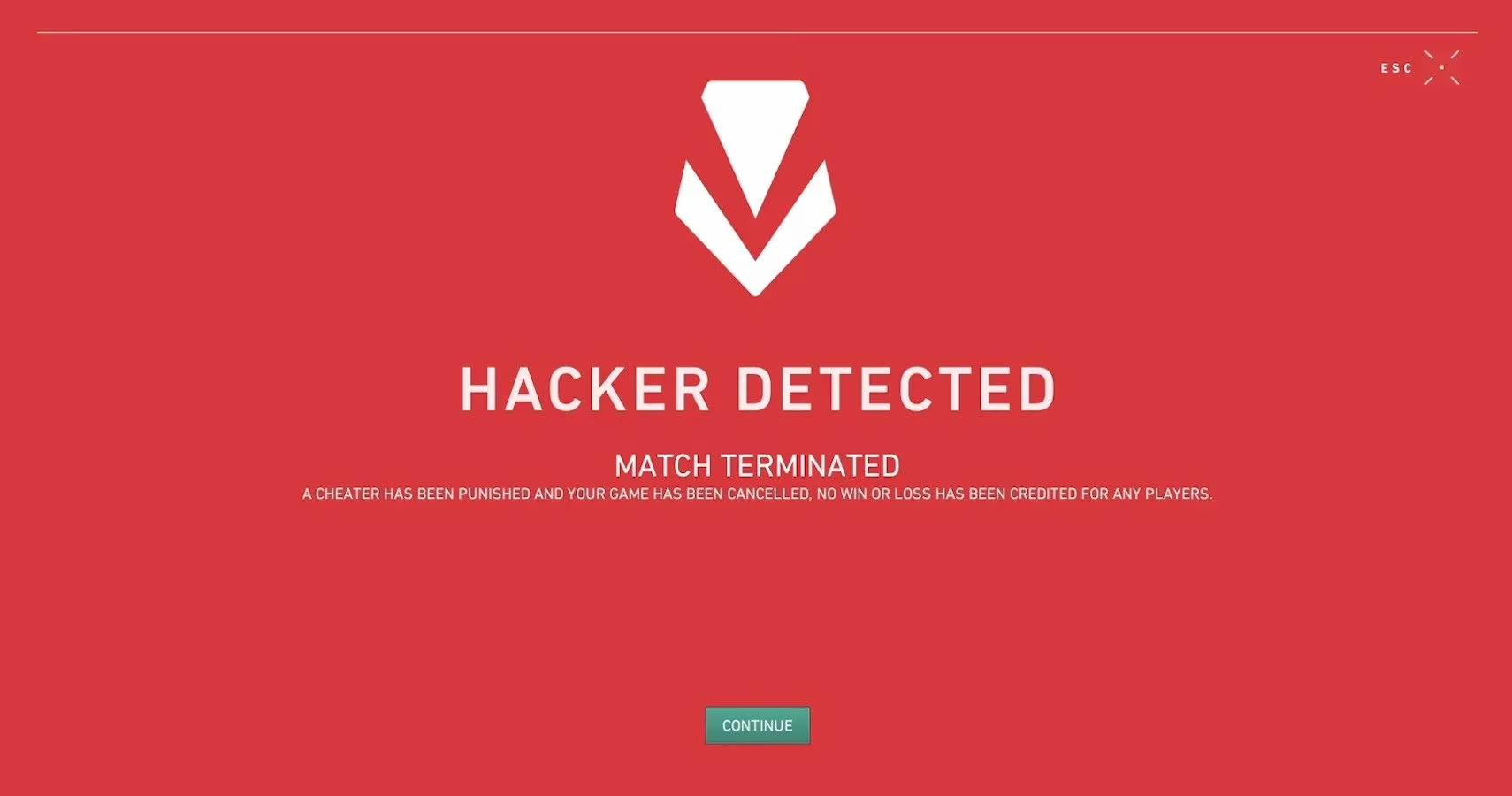
This wasn’t a subtle, silent operation. The streamer, whose identity has been intentionally obscured from public discourse, was actively promoting a rudimentary cheating tool while queuing into matches. The cheat itself, a poorly scripted piece of third-party software, triggered immediate red flags within the server architecture. Teammates in the live lobby were visibly uncomfortable, their voices cutting through the gameplay feed to call out the blatant behavior just seconds before the termination screen materialized. It was a scene of pure, unscripted justice: the match dissolved, the Riot account evaporated into a permanent suspension, and the Twitch channel hosting the ill-advised demonstration was removed from the platform in a coordinated strike.
The sequence of events painted a vivid picture of modern enforcement. The match termination was not a manual, human-driven decision but an automated defensive protocol. Vanguard’s kernel-level monitoring, a feature that has sparked both controversy and praise since the game’s inception, detected the injected code and executed a kill switch on the session to protect the other nine players in the lobby. This proactive termination spares legitimate players a frustrating defeat and prevents the cheater from gaining any illicit satisfaction or ranking progress. The message sent by this instantaneous feedback loop is more potent than any delayed ban wave; it is a public execution designed to deter would-be offenders.
Evidence suggested the entire performance was a reckless marketing stunt. A graphic overlay on the stream directed viewers to a specific Discord channel where the shoddy cheat was being peddled for a subscription fee. The economics of this underground market reveal a strange, desperate logic. Paying a daily rate—often cited around $10—to secure a temporary advantage that guarantees an eventual hardware ban seems profoundly illogical. Riot’s policy goes beyond mere account suspension. Through Vanguard, they frequently implement hardware identification bans that render a machine’s specific components toxic to the game’s servers, forcing cheaters to physically replace parts of their rig to regain access, a costly deterrent that separates the genuinely reformed from the repeat offenders.
Paul Chamberlain, the lead architect behind VALORANT’s anti-cheat measures, has spent years articulating the philosophical weight carried by his team. Since the early beta days, he has framed cheating as a societal problem within gaming, not just a technical nuisance. In recent developer diaries from late 2025, he reflected on the psychological toll cheating takes on a player base, a slow erosion of trust that can kill a game faster than any server outage. The fight, he noted, begins not with a single detection signature but with a cultural rejection of the “beta cheating” phenomenon, a strange ritual where individuals risk permanent exclusion from a title before it even officially launches.
This behavior remains one of the more baffling pathologies in the competitive scene. Cheating during a beta phase offers no lasting reward, no ranked ladder glory, and often burns a bridge to a game that might have provided thousands of hours of legitimate enjoyment. In 2026, the anti-cheat team has expanded its behavioral analysis systems, using machine learning trained on years of player telemetry to spot abnormal inputs before a third-party hook is even detected. They look for inhuman reaction times, impossible pixel-perfect flicks, and abnormal game sense that contrasts sharply with a player’s movement mechanics. This holistic profiling means that even a new, undetected cheat can get a player flagged if their decision-making appears suddenly superhuman.
The consequences extend outward into the content creation ecosystem. The dual-ban policy, coordinated between Riot and major streaming platforms like Twitch and YouTube Live, serves as a powerful disincentive. A streamer caught cheating loses not only their game account but often their entire channel, their emotes, their subscribers, and their source of income. This financial death sentence has made blatant cheat promotion increasingly rare, pushing the black market into darker, more private corners of the internet. When a clip surfaces, it quickly becomes a viral cautionary tale rather than an advertisement for cheats.
For the honest players grinding through their placement matches or competing in the sprawling Premier circuit, these moments of instant justice are a reaffirmation. They serve as a signal that the privacy-invasive nature of a kernel driver yields a tangible return on trust. While the debate about client-side anti-cheat depth will likely rage on indefinitely, the sight of a cheater being forcibly removed mid-plant or mid-defuse is an unalloyed good for the community. It validates the struggle of every duel lost to legitimate skill, firming up the boundary between genuine talent and artificial illusion.
The arms race endures. Cheat developers, driven by the lucrative market of gamers willing to pay daily fees to feel dominant, are perpetually probing Vanguard’s defenses. Yet, the 2026 version of VALORANT stands as a fortress built on years of combat data. It counters purchasing of pirated prowess not just with code, but with consequences that ripple through a player’s hardware, social credibility, and wallet. As the game moves forward, the policy remains brutally simple: if you try to break the game, the game will break your ability to play it.