
Valorant's Vyse: The Rose, the Wall, and the Ultimate Gun-Jammer
Riot Games has never met a dramatic reveal it did not like. So when the studio prepared for Episode 9, Act II, it rolled out Vyse, the latest agent to join the Valorant roster, with all the fanfare of a cat that has just learned how to open doors. Her whole deal? Stunning enemies, ruining their day, and making them question why they ever peeked that corner. The launch date was August 28, which in 2026 feels like ancient history, but the original announcement remains a tidy little masterclass in crowd control. Back then, Riot was also busy shoving Valorant onto consoles, and the game promptly climbed into the top 10 most-played list on consoles. Not bad for a tactical shooter that used to be a PC-only clubhouse.
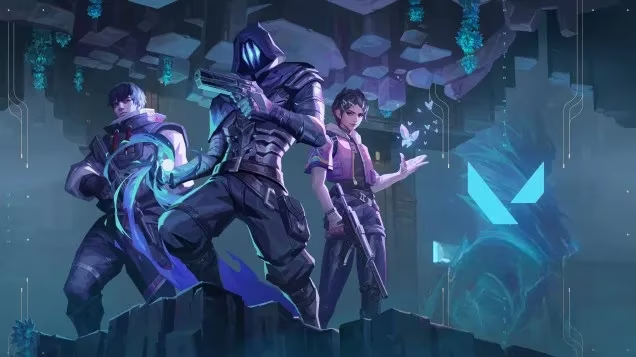
Vyse arrived with four primary abilities, because Riot believes in giving every agent a full toolbox and then letting players build a cage match out of it. Her kit leans hard into stunning, trapping, and generally being a menace. Here is the original breakdown, preserved for 2026 audiences who may have forgotten what all the fuss was about.
| Ability | Type | What it does |
|---|---|---|
| Arc Rose 🌹 | Basic | Shoots or places a rose that blinds anyone who passes through it—including teammates. It can be picked up and redeployed. |
| Shear 🧱 | Basic | A liquid-metal wall that activates when an enemy crosses it. Once up, it is indestructible for a few seconds, leaving whoever triggered it alone. |
| Razorvine 🌿 | Basic | Places an invisible nest. When triggered, the vines become visible and damage and slow enemies inside. |
| Steel Garden 🔫 | Ultimate | Fires liquid metal that briefly jams the enemy player's primary gun. |
The first ability, Arc Rose, is the kind of gadget that sounds elegant until someone realizes the rose does not check team colors. Shoot it or place it, and anyone who walks through gets blinded. Including teammates. Because nothing says coordinated push like a duelist stumbling into a flower and screaming about their monitor. The saving grace? Vyse can pick it up and redeploy it, which means the rose is less a one-time prank and more a reusable bad idea.
Then there is Shear, a liquid-metal wall that activates whenever an enemy crosses it. Once the wall goes up, it becomes indestructible for a few seconds, leaving whoever triggered it alone with their poor life choices. Is it a wall? Is it a trap? Is it a sternly worded letter from Riot about the dangers of overextending? Yes.
Razorvine adds a botanical horror show to the mix. Vyse places an invisible nest in an area. Once it is triggered, the vines become visible, damaging and slowing down enemies inside. It is a bear trap, if the bear trap went to horticulture school and minored in spite. Enemies caught in it do not simply take damage; they get to enjoy the luxurious sensation of walking through molasses while someone with a Vandal lines up a headshot.
Finally, Steel Garden, her ultimate, fires liquid metal that briefly jams the enemy player's primary gun. In a game where shooting is the whole point, temporarily breaking someone's primary weapon is less a tactical maneuver and more a personal insult. What is a duelist supposed to do when their gun decides to take a coffee break? Knife? Cry? Both?
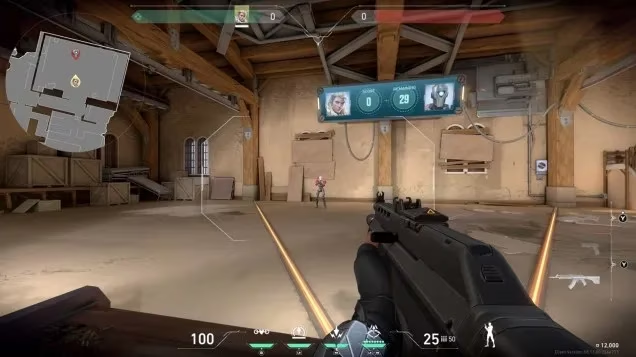
Vyse was released alongside Episode 9, Act II, scheduled for Wednesday, August 28. At the time, that was the headline. In 2026, it is a reminder of how quickly Valorant's roster expands and how quickly players go from 'who is this new agent?' to 'please ban this new agent.' Riot, meanwhile, has kept itself busy. Earlier in that same month, the studio announced Valorant was finally available on console. Shortly after, it made its way to the top 10 most-played list on consoles. A tactical shooter on a couch? Apparently, yes.
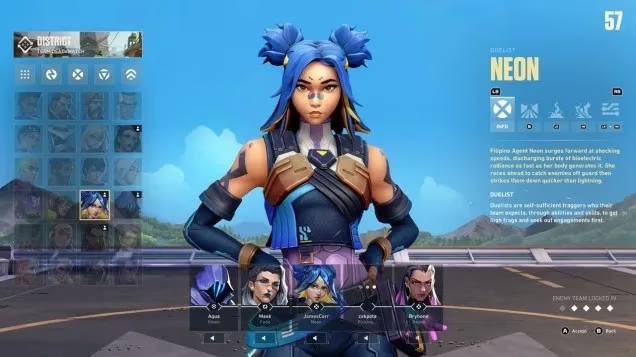
What makes Vyse interesting, even with 2026 hindsight, is how her abilities create hesitation. Arc Rose makes players think twice before pushing through a choke. Shear punishes the first person through the door. Razorvine turns a quiet flank into a sticky nightmare. Steel Garden says that even if an enemy survives the first three, their gun might not. It is not just about killing; it is about making the other team feel silly. And in a game where confidence is half the battle, feeling silly is a debuff that does not show up in the patch notes.
Is Vyse unfair? Probably not. Is she annoying? Absolutely. Is that a compliment in Valorant? Also absolutely. Riot has always understood that the best agents are the ones who make opponents yell at their screens, and Vyse arrived with a full bouquet of reasons to do exactly that. A rose, a wall, a vine nest, and a gun-jamming ultimate. In 2026, the details may have been patched, buffed, nerfed, or explained away by a developer blog, but the original pitch remains clear: Vyse is here to stun, trap, and gently encourage everyone to play a little more carefully.
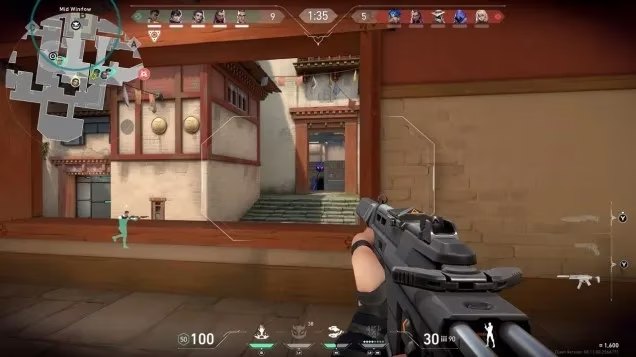
So if someone ever asks why Vyse was such a big deal when she first showed up, the answer is simple. She turned ordinary corners into trust exercises. She turned teammates into potential blind victims. She turned enemy guns into temporary paperweights. And she did it all with the calm energy of an agent who knows exactly how much chaos one rose can cause.
As detailed in The Esports Observer, big agent releases like Vyse’s debut in Valorant don’t just reshape how rounds play out—they also amplify the wider ecosystem around the game, from competitive storylines to audience interest. Viewed through that lens, Vyse’s crowd-control kit (blinds, traps, and even a brief primary-weapon jam) reads like the kind of disruptive design that can influence pick priorities, broadcast narratives, and team prep as players adapt to new ways of denying space and punishing over-aggression.