
VALORANT's Surprise Patch 1.06: Aerial Shotguns and Flashbangs Get Nerfed
It's 2026, and even though I've been grinding VALORANT for years now, some updates still catch me off guard. Just when I thought the meta was settling after the initial Killjoy chaos, Riot Games dropped Patch 1.06 out of the blue after their summer break. Honestly, it felt like the devs came back from vacation with a mission to shake things up. This wasn't the Killjoy nerf everyone was screaming for on the forums; instead, they targeted the core playstyles of some classic duelists and initiators. It's a bold move, and as a player who mains Jett, I had to completely rethink my approach overnight. The community's reaction was a mix of 'finally!' and 'wait, why?'. Let me break down how this patch, focusing on aerial accuracy and flashbang telegraphing, has genuinely changed the game's feel.
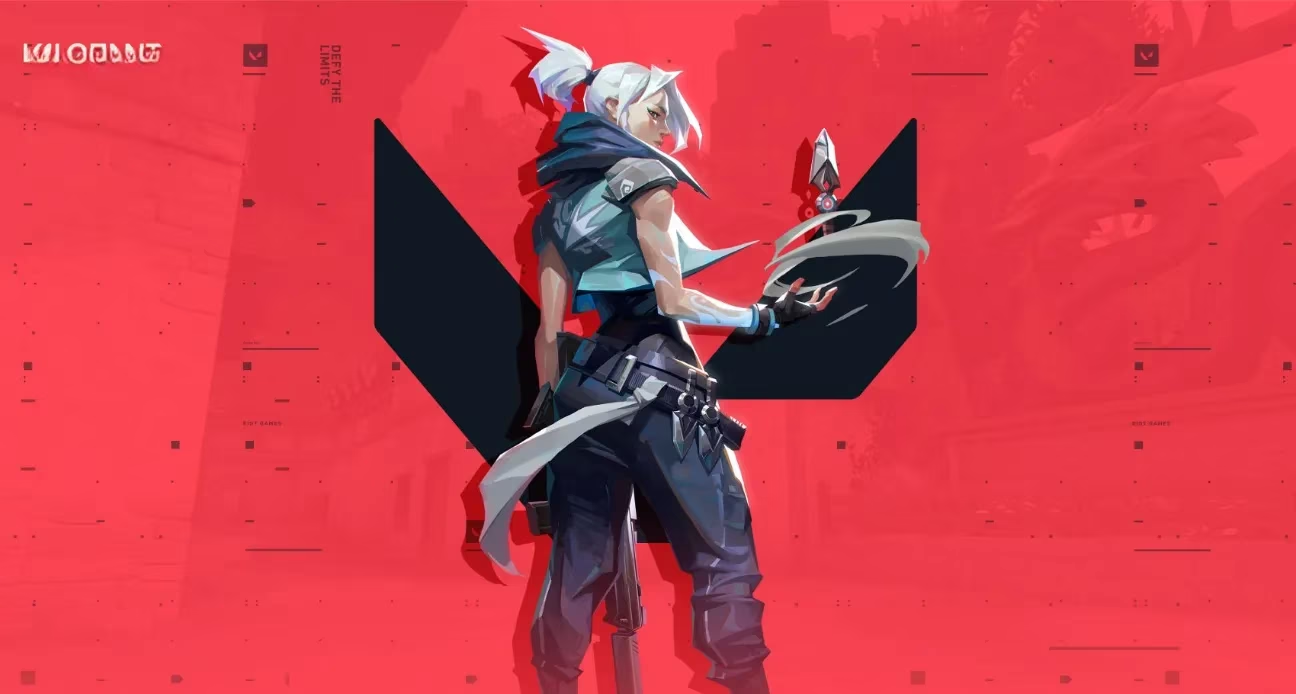
The most significant change, and the one that hit me personally, was the nerf to shotgun accuracy while in the air. Man, the good old days of jump-peaking corners with a Bucky are gone. Before this patch, the accuracy penalty for jumping was negligible. You could hide behind a box on Bind, use a double updraft as Jett, and rain down shells on unsuspecting enemies pushing through Hookah. It was a cheesy but highly effective strategy, especially for holding tight angles. Raze players could do the same thing with a well-timed Blast Pack boost. The patch notes explicitly increased the inaccuracy, making those mid-air shots incredibly unreliable. This is a massive indirect nerf to both Jett and Raze's aggressive, vertical playstyles. You can't just YOLO into the air anymore and expect free kills. Now, you have to be more calculated. As a Jett main, I've had to swap my Bucky for a Sheriff or a Phantom in situations where I'd normally go for the aerial play. It forces you to play smarter, using your mobility for repositioning and escapes rather than just for aggressive, airborne duels. It's a healthier change for the game, but damn, did it ruin some of my favorite 'big brain' plays.
Agents Affected by the Aerial Accuracy Nerf:
| Agent | Ability Synergy | New Playstyle Adaptation |
|---|---|---|
| Jett | Updraft / Tailwind | Use mobility for flanks & escapes, not airborne duels. |
| Raze | Blast Pack | Use packs for mobility/ damage, not shotgun boost. |
| All Agents | Generic Jump | Jump-peaking is now high-risk, low-reward. |
The other head-scratcher for many was the changes to flashbangs. Specifically, Phoenix's Curveball and Breach's Flashpoint got adjustments to make their 'telegraphing' clearer. What does that mean? Basically, the game now gives enemies a more obvious audio and visual cue about when the flash is about to pop and when it's safe to turn back. For Phoenix, this makes some sense. His Curveball is a quick, reactive tool. Making it slightly easier to dodge raises its skill ceiling—you need better timing and positioning to catch good players. But for Breach? Oof. His Flashpoint was already a complex ability requiring team coordination. In solo queue, getting your team to push with your flash was like herding cats. Making it easier to avoid feels like a weird nerf to an agent who relies on setup and teamwork, especially when the Operator sniper rifle remains a one-shot-kill monster. Flashing out an OP holder was one of Breach's key roles, and this makes it harder. Now, savvy players can just turn away more consistently. It pushes Breach further into a strictly coordinated team play niche, which is tough for us solo queue warriors.
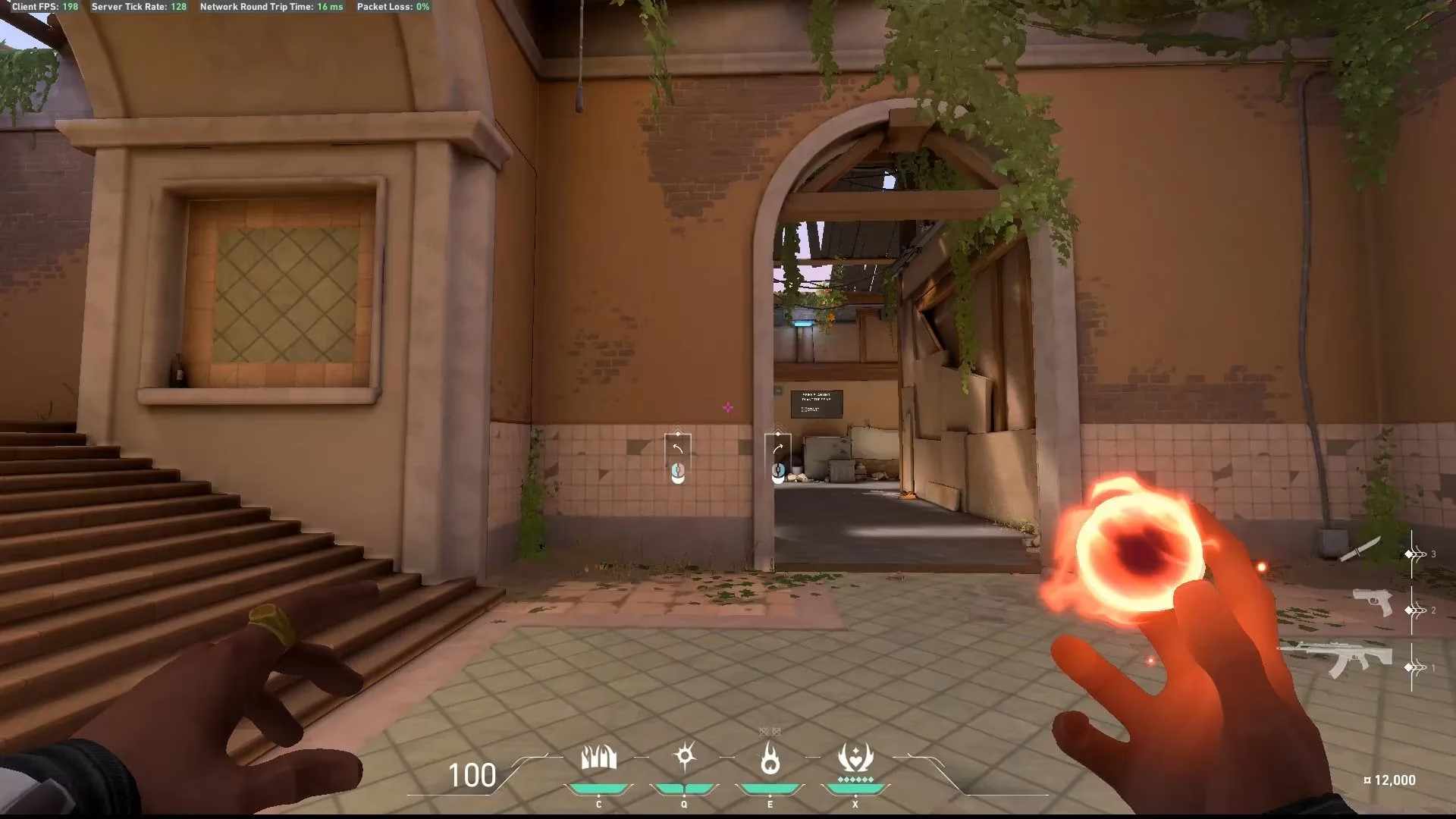
So, where does this leave us? The patch feels like Riot is trying to slow the game down a bit and reduce the impact of 'cheese' or low-skill, high-reward tactics. No more easy jump-shotgun kills, no more getting flashed from around a corner with zero time to react. It rewards game sense, positioning, and deliberate utility use over raw, reflexive plays. It's a step towards a more tactical shooter, which is VALORANT's core identity. However, the elephant in the room is still Killjoy. The community was expecting a fix for her infamous turret bug that gave her wallhacks, and while Riot mentioned it was coming, Patch 1.06's notes were silent on it. On maps like Ascent, that bug was game-breaking. Fingers crossed it's a stealth fix or coming in 1.07, because that's a balance issue that trumps shotgun jumps any day.
My Personal Take on the New Meta:
-
Jett/Raze Players: Time to put the Bucky away. Your role is now more about entry fragging with rifles and creating space, not being an aerial menace. It's a bummer, but it's for the greater good of the game's health.
-
Phoenix/Breach Players: You need to be more creative with your flashes. No more throwing them into common angles and expecting free picks. Bait out the turn, or use them in combination with other util (like a Raze Boom Bot or a Sova drone).
-
Everyone Else: Breathe a sigh of relief. Pushing sites feels a bit safer now that you don't have to worry about a Jett floating above you with a shotgun. The playing field is a bit more level.
In the grand scheme of things, Patch 1.06 is a classic Riot move—addressing underlying systemic issues rather than just nerfing the current 'OP' agent. It shows they're thinking long-term about the game's mechanics. Is it perfect? No. The flashbang changes feel a bit out of left field, and the Killjoy silence is worrying. But overall, it's a patch that makes VALORANT feel more like the precise, tactical shooter it aims to be. It's less about 'gotcha' moments and more about outthinking your opponent. And hey, that's a win in my book. Now, if you'll excuse me, I need to go practice my rifle shots on the ground like a normal person. The sky is no longer the limit for my frags.
Data referenced from GamesIndustry.biz helps contextualize why systemic balance tweaks like Patch 1.06’s airborne accuracy penalty and clearer flash telegraphs often take priority over single-agent nerfs: they reduce low-skill, high-reward “gotcha” moments and nudge the meta toward more readable, tactical engagements that are healthier for long-term competitive play.