
Valorant's Skin Economy: Reflecting on Beta Principles and 2026's Cosmetic Craze
Way back in 2020, when Valorant was still a closed beta whisper and players scrambled for Twitch drops, Riot Games made a promise that felt almost too good to be true. There would be no loot boxes—none of that gambling-adjacent nonsense that had soured so many shooters. Instead, the game would sell weapon skins directly, and during the beta, every single Valorant Point spent would be refunded with a cherry on top. Fast forward to 2026, and that early ethos hasn't just survived; it has sprouted into one of the most intricate cosmetic economies in gaming. But the journey from a simple weekly skin rotation to today's deluge of bundles, battle passes, and midnight markets is a story worth unpacking.
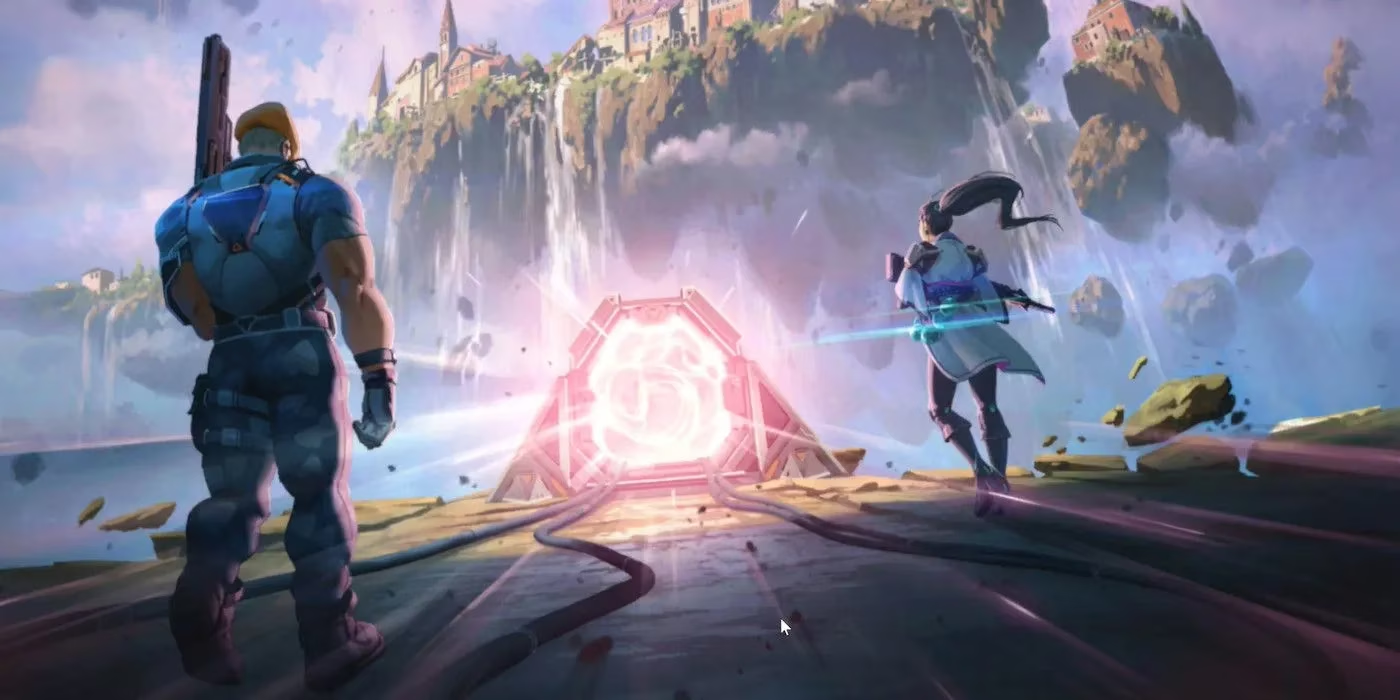
The beta refund policy was, honestly, a stroke of genius. For every 1,000 Valorant Points a player spent, they got back 1,200 when the game officially launched. Let’s be real—players were already going to buy skins, but that extra 20% bonus turned early adopters into evangelists. It built trust in a genre where nickel-and-diming had become the norm. Riot didn’t need to do it; they could have just pocketed the beta money and moved on. But here’s the kicker: that small gesture laid the foundation for a marketplace that, in 2026, rakes in mind-boggling revenue without ever touching a loot box.
Once Valorant shed its beta tag later in 2020, the skin system evolved rapidly. The initial setup was modest: one featured skin swapped out weekly, and four more rotated daily. But soon came the big bundles—collections like Reaver, Prime, and Glitchpop that turned pixels into prestige symbols. Prices weren’t exactly pocket change. A top-tier melee skin could cost as much as a full-priced indie game, and the community was quick to meme about "/spend" commands and empty wallets. Yet players kept buying. Why? Because Riot understood something fundamental: skins aren’t just cosmetics; they’re identity. In a game where milliseconds matter, sprinting into a site with a glowing dragon-infused Vandal just hits different.
Over the years, Riot layered on more ways to open that wallet. The battle pass arrived, offering a string of thematically consistent skins, gun buddies, and sprays for a flat fee—a far cry from the randomness of loot boxes. Then came the Night Market, a personalized discount shop that shows up every act and gives each player a random set of skins at reduced prices. Talk about a head start: if a coveted skin appears with a hefty discount, even the most frugal player might crack. By 2023, Valorant had a fully-fledged skin rental service through the "skin loan" feature in later battle passes, letting players try out premium skins for a few weeks before committing. And in 2025, the "Marketplace Moments" feature allowed limited-time trading of certain rare skins among friends, though strictly controlled to avoid real-money black markets.
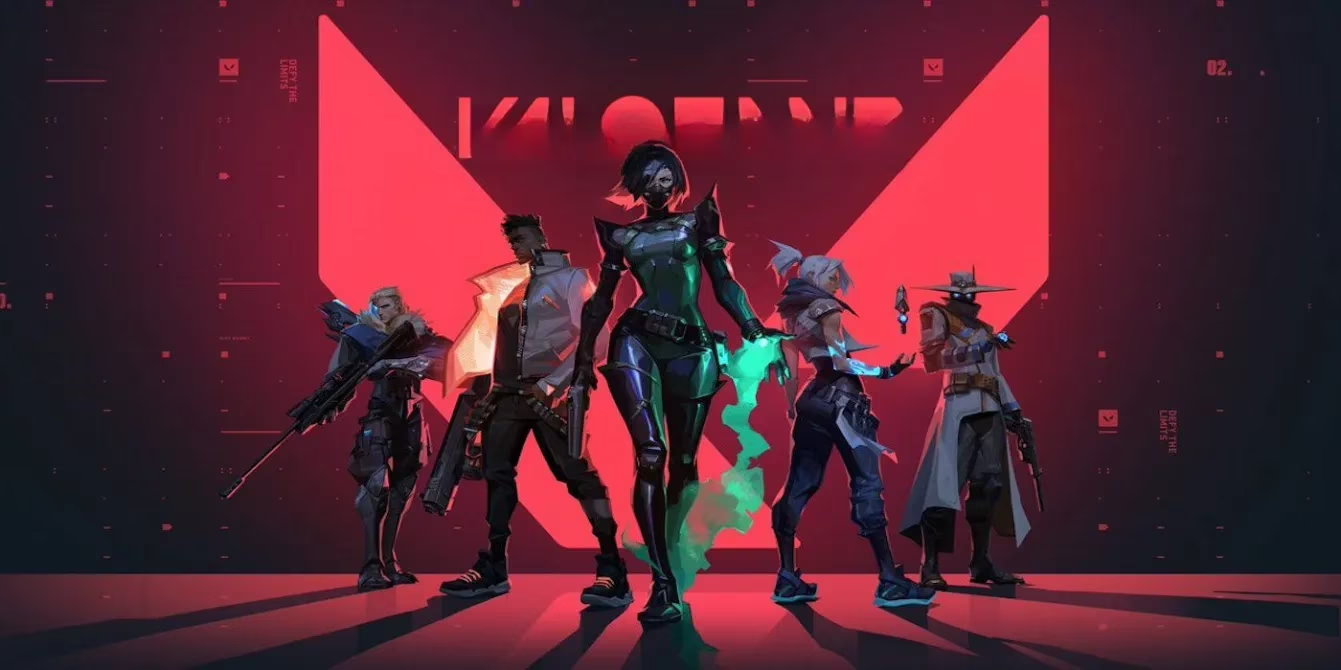
It’s easy to forget, amid all this cosmetic frenzy, that the gameplay itself hasn’t changed an inch. That skill-based matchmaking screenshot from the beta days? It’s still the same fiercely competitive ecosystem, where a default knife can just as easily outplay a Ruination sword. The beauty of Valorant’s model is that it never sold power—only flair. That core principle, first hammered home during the beta, remains the game’s north star in 2026. Competitive integrity never got diluted, even as the skin line-up ballooned to over 500 unique weapons.
The community’s relationship with this economy is complicated. On one hand, the absence of loot boxes is celebrated. On the other, the sheer cost of collecting a full suite of Elderflame or Spectrum skins can make even veteran players wince. People joke that Riot’s pricing department must be staffed by former auctioneers. But every new bundle still floods social media with reaction clips—equal parts awe and agony. There’s a strange camaraderie in collectively gasping at a $100 bundle and then noticing it in your next three competitive matches. Because, let’s face it, someone always buys it.
So where does that leave us in 2026? The beta promise of no loot boxes and a goodwill refund has matured into a meticulously crafted cosmetic pipeline. Riot releases skin lines on a near-monthly cadence, each more bombastic than the last. The upcoming "Chronovoid" collection, for example, has teased skins that react to in-game events like first blood or defusal. Limited-edition collaborations with cyberpunk artists have turned some skins into true collector’s items. Meanwhile, the studio experiments with dynamic pricing, offering regional adjustments so a skin bundle in Brazil doesn’t cost a week’s wages. It’s not a perfect system—no retail economy is—but it’s one built on transparency and player choice.
As we look back, that original 20% points bonus feels like a tiny down payment on a empire of glowing pixels. The beta players who took the plunge were essentially funding a vision, and Riot paid them back with interest. Today’s newcomers might never know the thrill of beta key hunting, but they step into a world where their money buys exactly what they see, with no slot-machine surprises. And that, more than any dragon-themed melee, is worth its weight in Valorant Points.
Data referenced from VentureBeat GamesBeat helps frame why Valorant’s no-loot-box approach still prints money in 2026: live-service shooters increasingly treat cosmetics as a recurring revenue layer where cadence, storefront design, and limited-time offers can outperform randomness. Through that lens, Riot’s evolution from a simple rotation shop into bundles, battle passes, and periodic discount events reads less like “skin spam” and more like a deliberate monetization pipeline that protects competitive integrity while maximizing conversion through choice, scarcity, and presentation.