
VALORANT's Map Ban Feature: Still Missing After All These Years
As VALORANT enters its sixth year of operation, the tactical shooter has evolved into one of the most-played competitive titles worldwide. With a sprawling agent roster of over 30 characters and a map pool that has swelled to double digits, the game has come a long way since its closed-beta launch in 2020. Yet one heavily requested quality-of-life feature remains strangely absent: the ability to ban maps from casual and competitive queues.

During the initial closed-beta period, players quickly noticed the limitation. With only three maps—Haven, Bind, and Split—available at the time, map diversity was a minor concern, but the potential for fatigue was already obvious. Many players shared the frustrating experience of being dropped onto the same map repeatedly, turning what should have been a varied experience into a monotonous grind. Back then, the community started a conversation about map veto systems, pointing to Counter-Strike: Global Offensive’s successful map selection feature as a blueprint. In CS:GO, players can simply mark which maps they are willing to queue for, drastically reducing the chance of landing in an unwanted arena and improving overall match satisfaction.
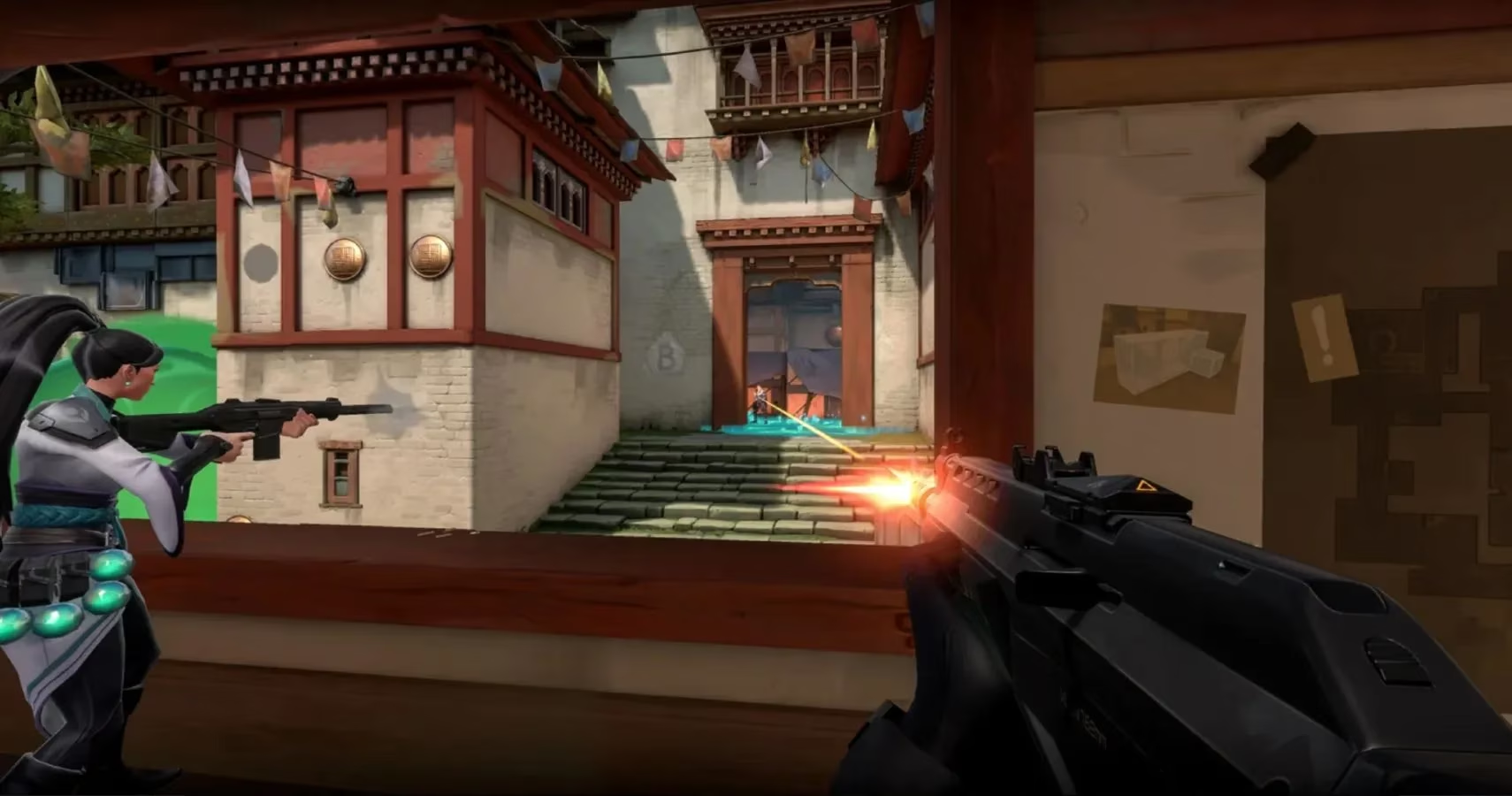
Fast forward to 2026, and the map landscape has expanded dramatically. Highlights include the neon-drenched streets of Fracture, the underwater mystique of Pearl, the sprawling three-site complexity of Lotus, and the recent addition of a high-tech urban map codenamed “Drift.” Each new map injects fresh tactical depth, but it also introduces a bigger problem: players are now far more likely to encounter maps they either dislike or simply don’t want to play after a string of repeated appearances. The absence of a map ban feature now feels less like a minor inconvenience and more like a fundamental gap in the game’s competitive infrastructure.
The impact on player retention and competitive integrity shouldn’t be underestimated. When every map is always available, the randomness of the queue can create “map anxiety” or outright burnout. A ranked player who specializes in agent compositions tailored for Haven’s three control points might find themselves struggling on the close-quarter chaos of Split, leading to a poorer individual and team experience. A map veto system would allow users to temporarily remove one or two maps from their personal pool, cutting down the unlucky factor. As a community manager noted on Reddit in mid-2025, “The number one complaint we see in player surveys is still map repetition. People want agency over their play session.”
Riot Games has introduced numerous updates over the years—agent reworks, anti-cheat improvements, and even a replay system that finally arrived in 2023—but a formal map banning mechanism hasn’t materialized. The closest alternative was the rotating map pool experiment in 2024, where certain maps were disabled for entire acts. While that reduced the overall active map count and eliminated some disliked maps for stretches of time, it removed player choice entirely rather than empowering individuals. The rotating system proved to be a band-aid solution that frustrated players who wanted to play a temporarily unavailable map while still being forced to queue into others they’d rather avoid.
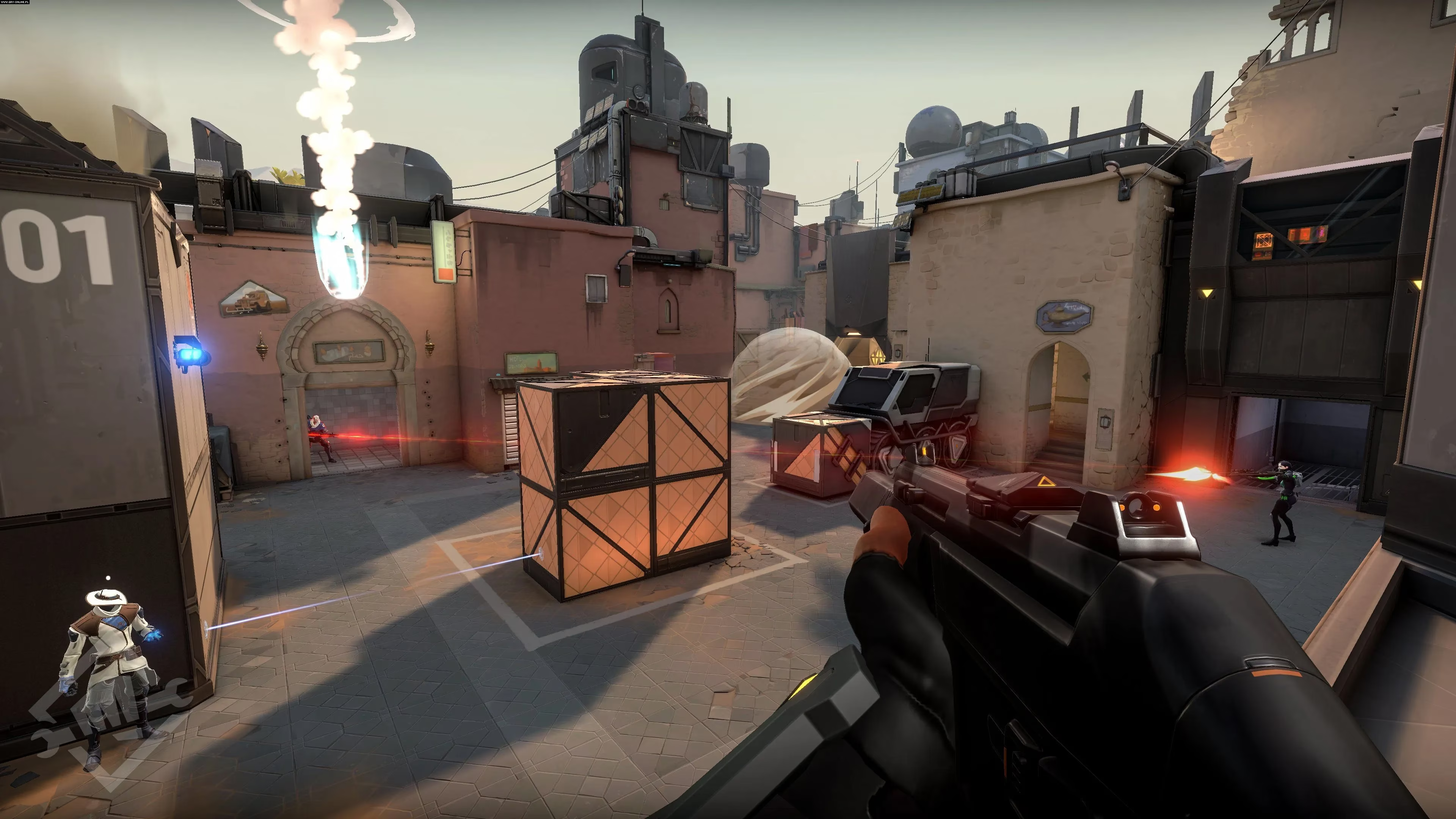
Implementing a map ban feature in VALORANT would not require a radical overhaul. A simple pre-queue toggle, akin to CS:GO’s system, could be integrated directly into the lobby UI. For competitive play, a pick/ban phase similar to the one used in VALORANT Champions Tour could be introduced, allowing teams to strategically eliminate maps before a match. While queue times could theoretically increase if a map is heavily avoided, Riot’s massive player base gives enough headroom to make it work without significant delays. Some data from a 2025 fan-conducted survey indicated that over 72% of active players would happily accept an additional 30-60 seconds of queue time in exchange for being able to dodge their least favorite map.
Looking back at those early closed-beta days, it’s impressive how much the title has matured. The core gunplay remains tight, the agent meta is constantly shifting, and the developers have shown a willingness to listen—albeit slowly—to community feedback. But after six years, the missing map ban option sticks out as a relic of a simpler time. As VALORANT continues to expand its map portfolio, giving players the right to say “no, thank you” to certain battlegrounds isn’t just a nice-to-have anymore; it’s essential for maintaining a healthy, engaged player base well into the next decade.