
TSM's Dominant Victory Sets the Standard for North American VALORANT
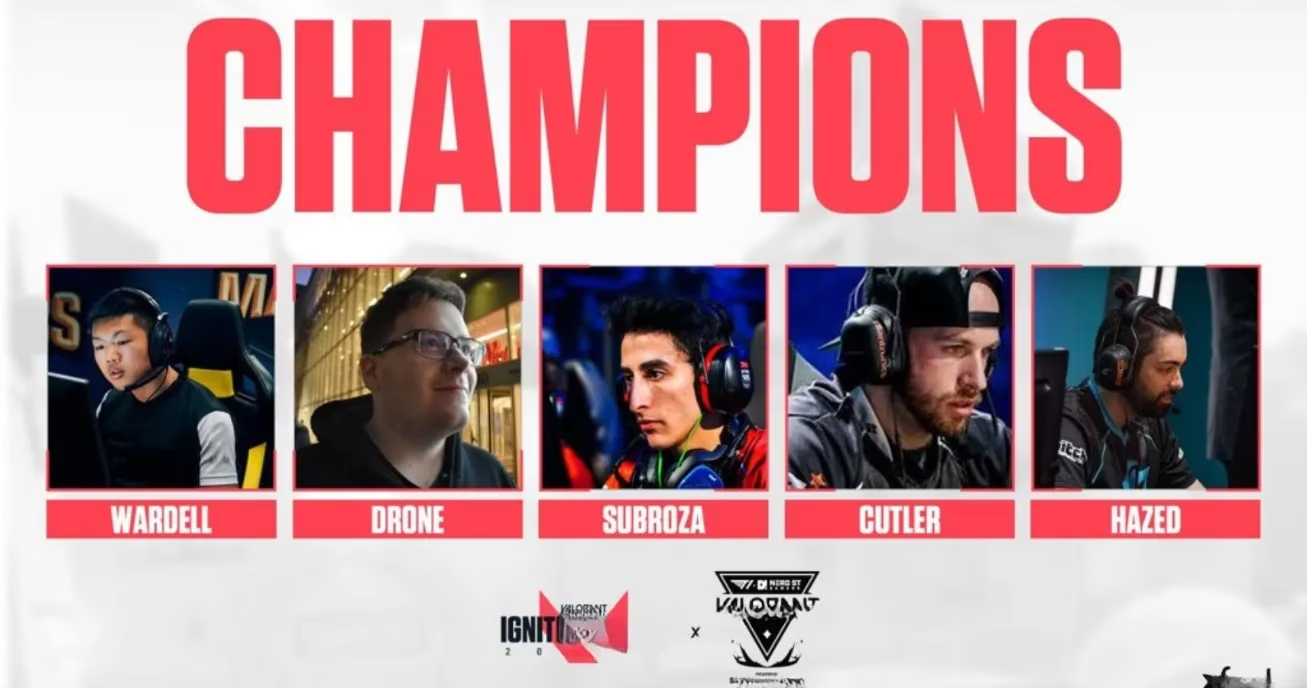
In the electrifying early days of VALORANT esports, a champion emerged to claim the throne. Team SoloMid officially won the biggest tournament the tactical shooter had seen, decisively sweeping the event hosts, T1, in a clean 3-0 series victory in the finals. This triumph wasn't just a win; it was a statement, setting a formidable benchmark for competitive play in North America.
The Stage and the Stakes
This historic event was part of the prestigious VALORANT Ignition Series, a collaborative effort between Riot Games, T1, and Nerd Street Gamers to launch the first major North American competition. The tournament was a veritable who's who of esports, featuring rosters from nearly every major organization on the continent. A stacked field including Gen.G, Sentinels, Immortals, Cloud9, 100 Thieves, and FaZe Clan all battled fiercely for a share of the $50,000 prize pool. The air was thick with anticipation, as fans and players alike wondered which squad would etch their name into VALORANT's nascent history.
The Unstoppable March of TSM
Entering as one of the clear favorites, TSM didn't just meet expectations—they shattered them. Their dominance was absolute. They stormed through the group stage with a flawless 3-0 record. Even in the high-pressure playoffs, they conceded only two maps total: one to the orgless squad "Together We Are Terrified" and another to their eventual finals opponent, T1. This was a team operating at a different frequency.
At the heart of this machine was Matthew "Wardell" Yu, who quickly became the tournament's undisputed superstar. He presented a masterclass in precision, proving to the world that no one could match his terrifying prowess with the Operator sniper rifle. His statistics were nothing short of phenomenal:
-
Highest KDA Ratio in the tournament.
-
Lowest deaths per map at an astonishingly low 1.69.
-
An average of 11 kills per map, showcasing both lethal efficiency and survivability.
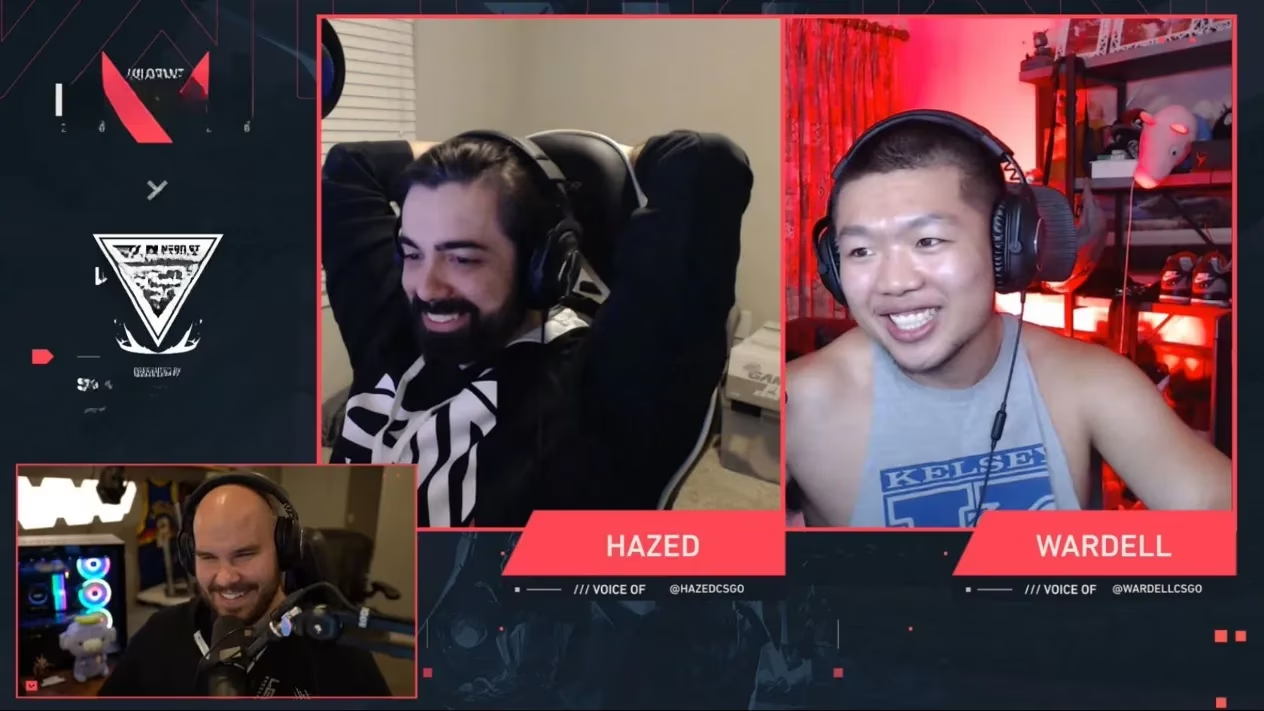
But TSM was far from a one-man show. The team was a symphony of skill perfectly conducted by veteran in-game leader James "hazed" Cobb. Taylor "Drone" Johnson provided explosive, game-changing moments that left spectators in awe. Meanwhile, the duo of Stephen "reltuC" Cutler and Yassine "Subroza" Taoufik consistently shut down opponents, making TSM's defensive setups nearly impregnable. With this cohesive unit, no other team could come close to touching their level of play.
Rising Stars and Valiant Challengers
While TSM rightly claimed the lion's share of glory, they were not the only ones to capture the imagination of North American fans. The hosts, T1, established themselves as the clear second-best team, demonstrating remarkable consistency by not dropping a single map to any opponent other than the eventual champions. Their runner-up finish was a testament to their skill and resilience.
Individual brilliance shone brightly even in teams that fell short of the trophy. For Cloud9, Tyson "TenZ" Ngo delivered a jaw-dropping performance, posting a monstrous average of 23.4 kills per map. His incredible fragging power became a major storyline, even though his team failed to advance from the group stage. It was a preview of the superstar he would become.
The tournament also served as a platform for players from other esports to prove their mettle. Former Overwatch League star Corey "Corey" Nigra, playing in his first event under the FaZe Clan banner, demonstrated that a background in competitive Counter-Strike wasn't a prerequisite for VALORANT success. His adaptability and skill helped FaZe secure a respectable fourth-place finish. Similarly, 100 Thieves' Spencer "Hiko" Martin lived up to his pre-launch hype, showcasing the veteran tactical intelligence that would make him a cornerstone of the scene for years to come.
The Legacy of a Landmark Victory
As the confetti settled, Team SoloMid's victory was more than just a tournament win; it was a foundational moment for VALORANT esports in North America. They didn't just win—they defined what a championship-caliber team looked like: strategic depth, individual excellence, and unshakable teamwork.
Looking back from 2026, this Ignition Series event was the spark that ignited a continent's passion. It provided the first clear hierarchy, the first iconic plays, and the first true rivalry. While the esports landscape has evolved dramatically since then, with massive international leagues and million-dollar championships becoming the norm, the story of TSM's dominant early conquest remains a legendary chapter. It set the standard, raised the bar, and showed every aspiring team and player exactly what was required to reach the pinnacle of competitive VALORANT. The future was wide open, but one thing was certain after that weekend: the race to catch TSM was officially on. 🏆