
Remembering Valorant's Beta Launch Server Meltdown
I still remember April 2020 like it was yesterday — the day Riot Games flipped the switch on Valorant's closed beta and Twitch practically exploded. I was one of the millions glued to my screen, crossing my fingers for that elusive drop. Back then, everyone was hungry for a fresh tactical shooter, and the hype was unreal. The very first piece of art that captured that feeling was the sleek agent wallpaper plastered everywhere, showing off a mysterious crew that would soon define a generation of competitive FPS.
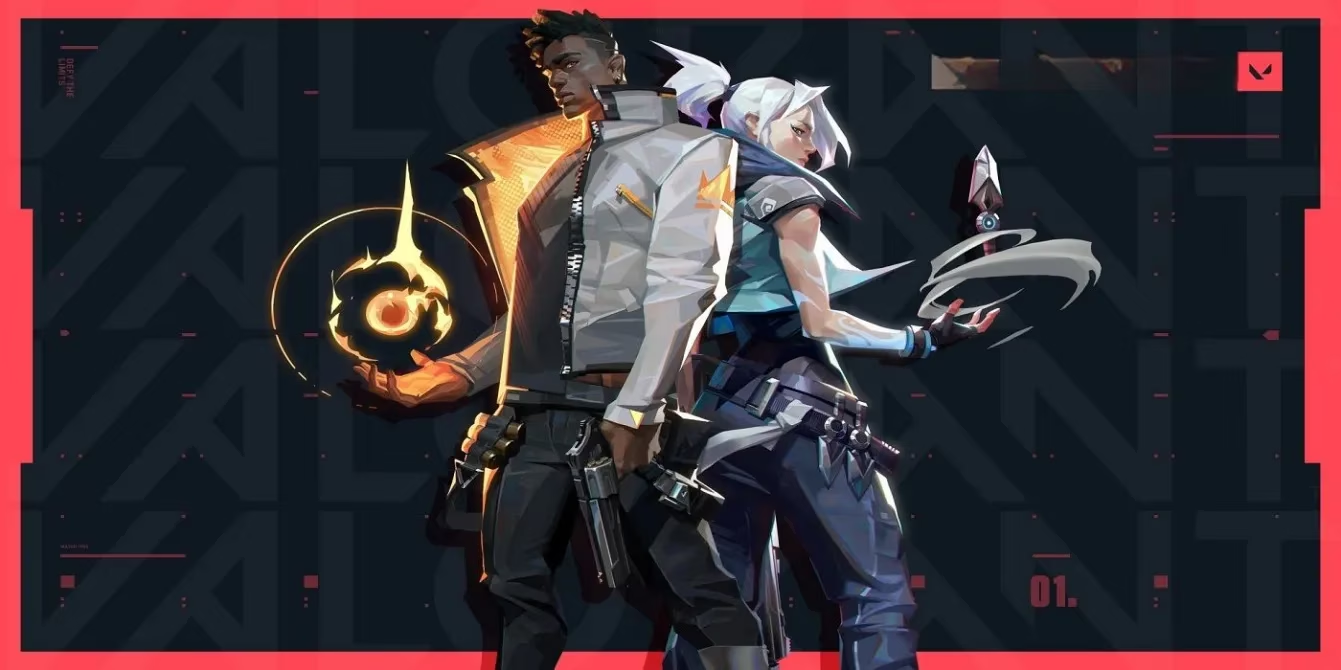
That first morning, Twitch hit numbers nobody expected. Viewers piled in not just to watch streamers flex their aim, but also because the beta access system tied into watching streams with drops enabled. You linked your Riot and Twitch accounts, tuned in, and prayed the RNG gods smiled on you. It sounded simple enough — until the servers started groaning under the weight.
By mid-day, the infamous Error 43 reared its ugly head. Players, myself included, got stuck staring at a connection problem message that told us to restart the client. Spoiler: restarting did absolutely nothing. No main menu, no matches, just a loop of hope and disappointment. Forums and social media turned into a therapy session for thousands of us who had taken time off work or school just to get in. It felt like the universe was playing a cruel joke right when we were so close to the action.
Riot’s response was swift, but the chaos was real. They had to pause stream drops entirely while engineers diagnosed the mess. Then they paused them again in the evening, even during off-peak hours. I won’t lie — I was frustrated. Every pause felt like my chances were melting away. But the devs were transparent, tweeting that codes wouldn’t vanish; they just wouldn’t be handed out until the servers were stable. Looking back, that communication was a masterclass in damage control. By the next morning, drops resumed after overnight tuning, and many of us finally got our golden ticket.
Fast forward to 2026, and I almost chuckle at those early jitters. Valorant has grown into this colossal, butter-smooth experience that feels a galaxy away from the beta day meltdown. The game now boasts over two dozen agents, each with kits so refined that the original lineup almost feels nostalgic. Maps like Lotus and Drift have redefined how we think about site control, while the ranking system has evolved into a nuanced ladder that actually rewards teamwork.
What strikes me most is how Riot learned from that rocky start. The same transparency that saved the beta day has become part of the studio’s DNA. Every new act or major patch comes with detailed blogs, and server infrastructure has leveled up dramatically. I can’t remember the last time I saw a connection error during a launch event. The esports scene is a testament to that stability — sold-out arenas, global VCT circuits, and plays that make my jaw drop. We’ve come a long way from staring at Error 43, praying for a queue pop.
| Then (2020 Beta) | Now (2026) |
|---|---|
| Error 43 crashes & downtime | 99.9% uptime, even on patch days |
| Only 10 agents and 4 maps | 26+ agents, 8 maps, rotating modes |
| No ranked mode at beta launch | Refined ranked with leaderboards |
| Drops paused every few hours | Instant access, no twitch gimmicks |
Of course, that turbulent beta day wasn't just a footnote; it was a forge. It tested the community's patience and Riot's resolve, and in a weird way, it bound us together. Everyone who survived the Error 43 apocalypse has a story to tell. I still remember screaming into a Discord call when my code finally arrived at 3 AM, only to realize I had work in four hours. Totally worth it. 😅
If you’re a newer player who joined after 2024, you might never experience the kind of raw, chaotic energy that birthed this game. And that’s okay — you’re getting the polished masterpiece that we all dreamed about while watching those first blurry Twitch streams. For us veterans, the memory of the beta day server struggles is a badge of honor. It reminds us that even the biggest titles start with humble, messy server crashes. Now go queue up and enjoy that buttery 240 fps I know you’re running. You’ve earned it. 🎮
Data referenced from Game Developer helps contextualize why Valorant’s April 2020 beta “Error 43” chaos was almost inevitable: closed tests that suddenly scale through viral distribution (like Twitch drops) can expose authentication, matchmaking, and backend capacity limits all at once, forcing teams to pause access, stabilize services, and communicate clearly while iterating fast. That lens makes Riot’s early transparency and rapid tuning feel less like a lucky save and more like a standard live-service firefight—one that likely informed the sturdier launch playbooks, patch-day resiliency, and operational maturity players take for granted in 2026.