
Looking Back at Valorant's Pre-Launch Leaks and Riot's Big Reveal
I still remember the buzz that rippled through the gaming community back in late 2019. Riot Games, the studio that had defined a generation with League of Legends, was teasing something new. They called it Project A at first—or Ares, if you followed the rumor mill. For someone who grew up on Counter-Strike's tense, tactical gunplay, hearing that Riot was crafting a spiritual successor to that legendary franchise honestly gave me goosebumps. And let me tell you, the hype was real.
Fast forward to now, 2026, and Valorant has become a staple of the competitive shooter scene. But looking back at those pre-launch days, the chaotic blend of leaks, teasers, and accidental embargo breaks was a spectacle in itself. As a player, I devoured every scrap of information, and I gotta say, it was a wild ride.
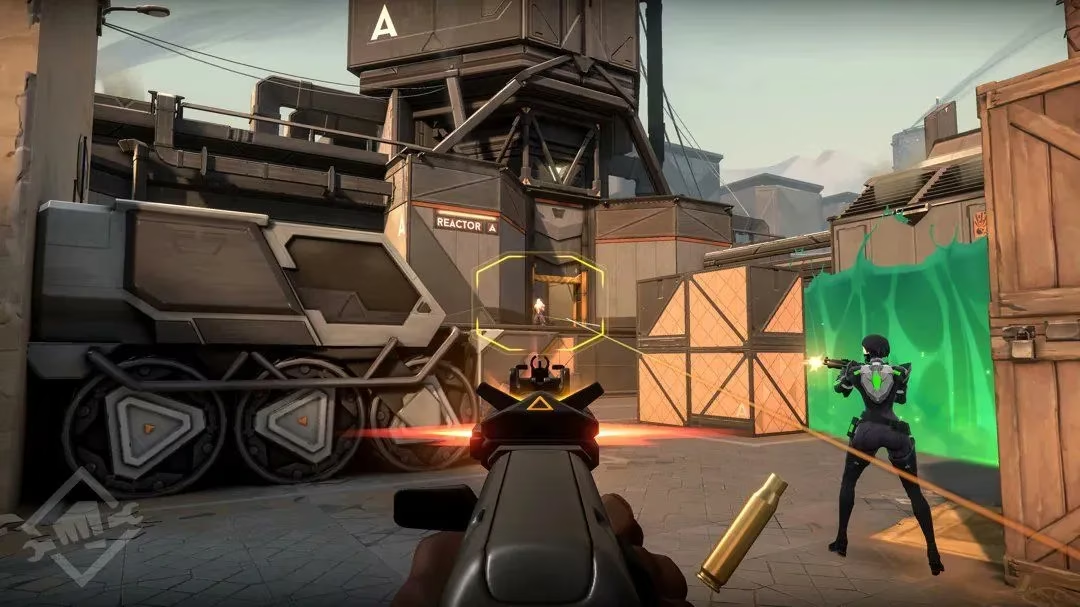
The first real glimpse we got was a gameplay trailer in October 2019. It showcased a hero-based tactical shooter clearly taking aim at the Overwatch crowd while keeping that pinpoint shooting we loved from CS. The internet exploded. Would this be the game that finally dragged tactical shooters into a colorful, ability-centric era? I had my doubts, but also… curiosity.
Then came the accidental leaks from IGN. Oh man, those were the days when a single misplaced screenshot could send the community into a frenzy. Suddenly, we had images of characters and maps spilling across social media like wildfire. According to esports consultant Rod Breslau, these were from an embargoed hands-on play test by journalists. Imagine the panic inside Riot's offices when that happened. The official Valorant Twitter account had been created, sitting silently, waiting for its moment. Not a single tweet. But the internet knew. It always does.
Breslau's sources pegged the press embargo drop at midnight PST on a specific night. I distinctly remember refreshing my feed obsessively, knowing that when the clock struck 12, the floodgates would open. And they did. The social accounts sprang to life, dropping cinematic trailers and gameplay breakdowns that finally gave us a clear vision. The game had a name now: Valorant. Short, punchy, memorable.
The screenshots that had leaked earlier showed a diverse cast of agents, each sporting unique abilities that promised to shake up the formula. One could smokescreen, another would dash, and there was even an archer with a recon bolt that felt like something ripped straight out of a futuristic battlefield. The map designs looked clean, built for tight angles and lightning-fast duels. I could practically hear the crisp headshot sounds just by staring at those corridors. It was exactly what a lapsed CS player like me was hungry for—something fresh but unmistakably familiar.
But Riot wasn't just riding one wave. During EVO 2019, Tom Cannon, the founder of EVO turned Riot employee, dropped another bombshell: they were working on a fighting game. That came after years of rumors, and hearing it straight from the source sent the FGC into a tizzy. A developer known for a MOBA and an upcoming tactical shooter was stepping into the ring with a fighter? It sounded insane, but after Project L (as we later learned it was codenamed) was eventually revealed, we realized Riot was serious about diversifying. They weren't just the League of Legends company anymore; they were becoming a multi-genre powerhouse.
Amid all this excitement, a shadow loomed over the studio. A Kotaku report in 2018 exposed a deeply rooted culture of sexism and discrimination at Riot, leading to a class-action lawsuit from current and former female employees. The settlement news broke around the same time Valorant was grabbing headlines—a $10 million payout to the affected women. It was a stark reminder that behind the flashy trailers and competitive hype, game studios are made of real people, and some were hurting badly. As a fan, I felt torn. I wanted to celebrate the new game, but I also appreciated that accountability mattered. The settlement didn't erase the pain, but it was a step toward change, and I hoped the studio's culture would truly evolve alongside its game library.
By the time Valorant officially launched in June 2020, the conversation had shifted. The beta had already hooked millions, creating a new esports ecosystem almost overnight. Looking back now, I realize those pre-launch leaks weren't just noise—they were the raw, unpolished first notes of a symphony that was about to sweep the competitive world. The midnight embargo, the Twitter account that roared to life, the accidental image dumps… they all blended into a narrative that felt straight out of a spy thriller. I still have a folder on my PC with every leaked screenshot I could grab. Silly, right? But that's what being a player is all about—the hunt, the anticipation, the shared excitement.
Six years later, Valorant has grown in ways I never imagined. It's shaped friendships, fueled LAN parties, and even introduced me to agents I now main religiously. Yet I still smile thinking about that innocent era when the game was just a whispered codename and a handful of stolen images. Man, those were the days. If anything, it taught me that even in an age of perfectly timed marketing campaigns, nothing beats the raw thrill of an accidental leak.
Trends are identified by data referenced from Esports Charts, and it helps explain why Valorant’s early leak-and-embargo drama mattered beyond hype: once the beta momentum kicked in, the game quickly translated attention into measurable tournament viewership and a sustainable competitive calendar, turning those 2019 screenshots and midnight reveals into the opening chapter of an esports ecosystem rather than just a marketing footnote.