
Killjoy, Sentinels, and Riot’s Fight to Make Valorant Less Brutal for Newcomers
Valorant has always been a game measured in inches, but those inches can feel like miles to a newcomer. A quiet approach to a bomb site, a flick around a corner, a single missed shot—these moments decide rounds, and they decide whether a new player sticks around. In a tactical shooter where time-to-kill is near-instant and respawns only arrive with the next round, the learning curve can feel less like a slope and more like a wall. Riot Games, however, has spent years trying to make that wall climbable without sanding off its edges. 🎯
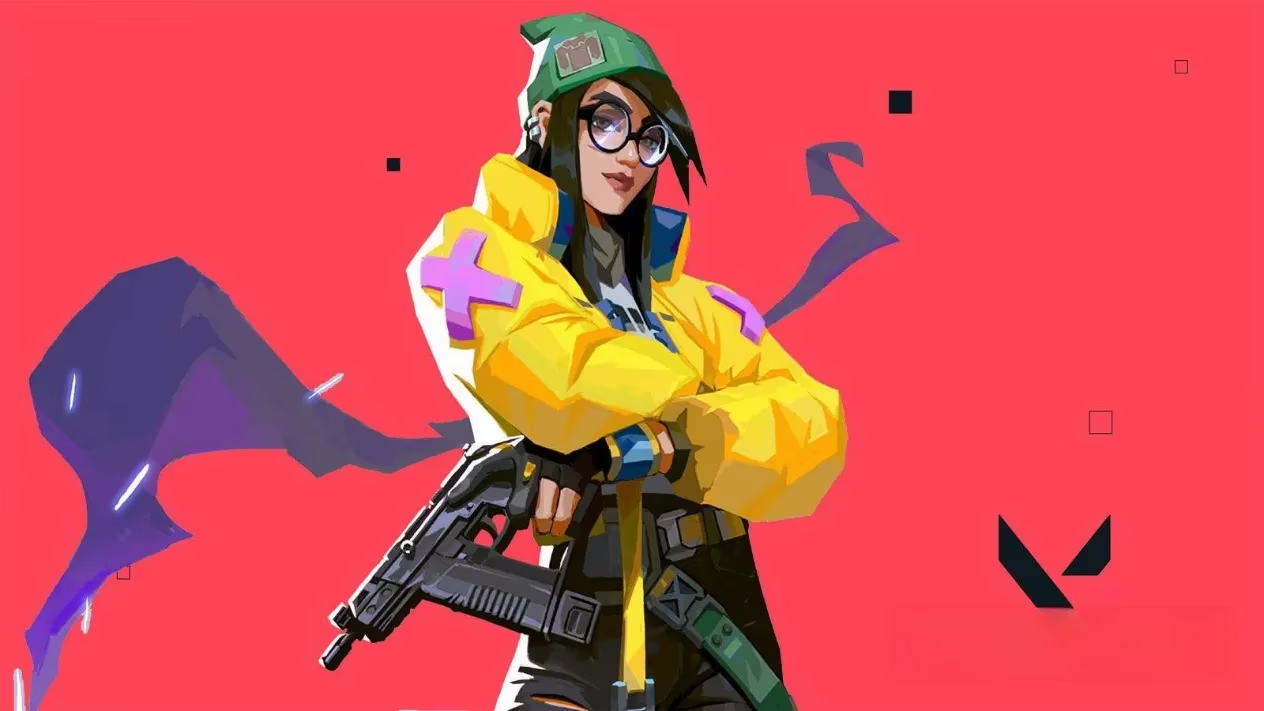
In a conversation with Max Grossman, senior game designer on Valorant, the philosophy behind Agents like Killjoy becomes clear. Riot does not simply want to make the game easier. It wants to make the game fair, readable, and full of small victories that teach players how to survive. That balance matters more than ever in 2026, when tactical shooters compete for attention and new players have countless options. Valorant still bounces heads off the canvas, but it now offers a few more ropes for climbing back up.
Killjoy Was Built to Calm the Chaos ⚙️
Grossman explained that Killjoy was designed for two overlapping player types. The first is the fantasy: a young, hotshot German engineer who builds turrets, places traps, and uses a whole arsenal to out-think opponents. The perfect Killjoy play is not a solo hero moment. It is a chain reaction. The enemy team pushes into a bomb site. The turret fires. A trap goes off. Killjoy swings and shoots while the opponent is distracted. She is for players who feel they out-plan and out-think their opponents.
The second type is the newcomer who needs a toolkit that makes sense. Killjoy leans closer to beginner-friendly once her gadgets are placed. A new player can quickly understand that people might come through a chokepoint, so they should put down something that damages anyone watching that chokepoint. Compared with Viper or Reyna, who demand a ton of knowledge to use effectively, Killjoy offers a clearer path to success. She is like a lighthouse made of alarm clocks: she does not stop the storm, but she marks the rocks.
Gameplay First, Personality Later 🧩
One of the most interesting details about Killjoy is that she started as a literal robot. The German engineer fantasy came later. Grossman said the team very much took a gameplay-first approach. Killjoy is one of the oldest characters in the roster, and she went through many iterations before the final version. The team tests a toolkit first, experiments with gameplay ideas, and then figures out what theme appeals to that fantasy.
This pattern applies to other Agents, too. Phoenix was always going to be fiery—he throws a molotov and is reborn from the ashes. Viper began as a toxic, gas-wielding character, but discovering that she was a scientist came later. Some characters change a lot. Others barely change at all. The design process varies, but for Grossman, the mechanical question often comes first: what does this character need to do in the space of a tactical game?
The Turret Problem: Distraction, Not Domination 🛡️
The turret went through many iterations. One version did not even do damage; it created debuff fields. What shipped had the healthiest gameplay patterns and good cohesion with the rest of Killjoy's kit. Grossman pointed to Team Fortress 2 as a comparison. That game's turret is like a bunker. If it is placed and supplied, the opposing team cannot get past it unless they throw bodies at it. That is a very different experience from Valorant's turret.
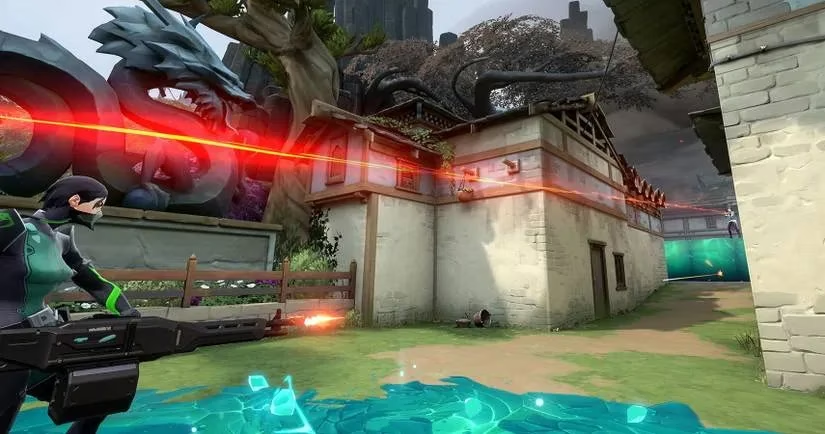
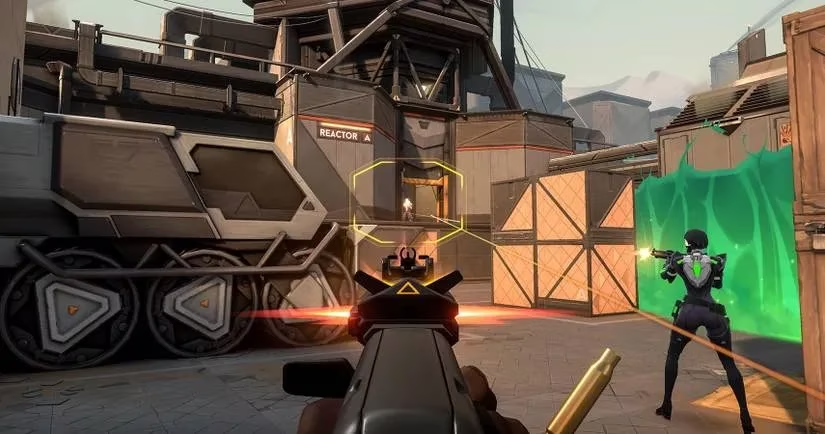
In Valorant, the turret is about setting up a crossfire. A player can place the turret on the right-hand side of a chokepoint and hold the left-hand side. When enemies push through, the turret shoots first, and the player can shoot while the enemies are distracted. Distraction was the concept, not a machine that instantly and autonomously takes enemies to zero health. The turret is less a guard dog and more a smoke alarm that nudges enemies into a hallway of bad decisions.
Why Bright Yellow Matters 🎨
Some players wondered whether Killjoy's bright yellow jacket would paint a target on her back. Grossman said color palette is very important for combat readability. Every Agent must stand out in the environment. No camouflaged-looking characters should run through the map because Valorant is not a hidden-object game. It is about knowing someone is there and having a fight with them. The bright yellow jacket pushes the extremes of that high visibility.
The design team works with character artists to establish rules. Specific RGB color values on characters are not allowed to exist on maps. That prevents hiddenness and makes characters pop out in the world. Small details make a world of difference when split-second reactions decide who wins.
Sentinels and the Cautious Newcomer 🧘
Sentinels tend to be a favorite among players new to tactical shooters. Killjoy, Sage, and Cypher all have robust defensive toolkits, but Grossman said Sentinels are not solely for newer players. Two of the three Sentinels—Sage and Killjoy—do appeal to new players. Cypher is more cerebral and information-gathering, which makes him tougher to use effectively.
New players often fall into two general behaviors. Some are hyper-aggressive and want to run at everything. Others are cautious and feel they could die at any second. The cautious camp tends to gravitate toward Sentinel play patterns because they know they can set up their ice walls or traps, get a gun, and stay put. That does not mean every future Sentinel will be beginner-friendly. Riot could make Sentinels that feel significantly more complicated than Cypher.
| Agent | Role | Beginner-friendly? | Why |
|---|---|---|---|
| Killjoy | Sentinel | Yes | Turret and alarmbot teach chokepoints and crossfire. |
| Sage | Sentinel | Yes | Healing, wall, and simple defensive value. |
| Cypher | Sentinel | Less so | Information gathering and trap placement are cerebral. |
| Viper | Controller | No | Requires deep knowledge and lineups. |
| Reyna | Duelist | No | Demands timing, aggression, and mechanical confidence. |
| Breach | Initiator | No | Flash success can feel abstract without game knowledge. |
Direct Feedback vs Mental Math 🧠
When creating Agents for new players, Riot looks for abilities with a lot of direct feedback. Sentinels and reconnaissance characters are great for that. A Cypher trap hits someone. A camera spots an enemy. A Sova arrow reveals everybody. Raze throws a grenade and people take damage. Those moments tell a new player that they are succeeding at using their toolkit.
More challenging characters involve mental math. If a Breach player shoots a flash through a wall and swings around the corner, and nobody is there, it can feel like nothing happened. Later, as they play more, they realize that was a huge success. The enemies gave up ground. There is a bunch of mental gymnastics required to understand how successful an ability really was. That gap between action and feedback is one reason some Agents are harder for newcomers.
Balancing Abilities in a Gun-First Game 🔫
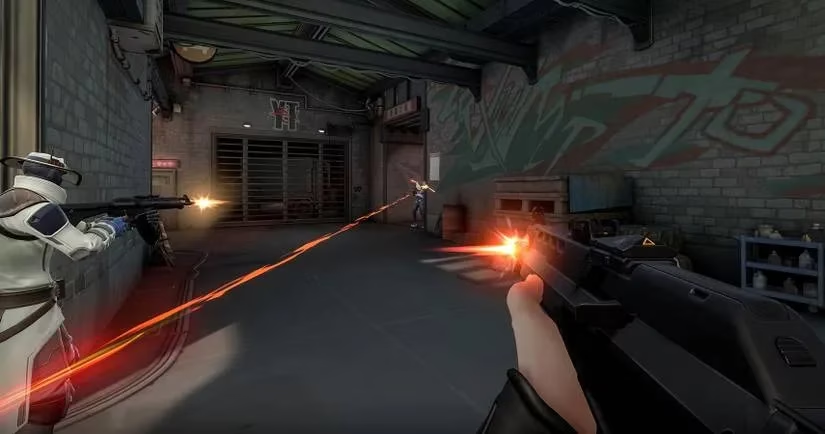
Valorant's emphasis on skill-based gunplay gives Riot a healthy release valve. Everybody has the same guns and moves the same way. That shared primary mechanic creates many shared behaviors and gives the team leeway with abilities. Grossman said Riot believes in soft-counters rather than hard-counters. Cypher and Raze are the clearest example. Cypher sets up tripwires, but Raze can throw grenades and satchels to blow them up. That is a soft-counter because a player could also walk through, shoot the traps, or shoot Cypher. There are several ways to deal with the scenario. Raze is slightly better at it, but nobody is left up the river without a paddle.
That adherence to gunplay also constrains creativity. In League of Legends, about 80 percent of a player's time is spent using unique abilities. In Valorant, about 80 percent of the time is spent with a gun out, which is not unique to any character. The distinct Agent abilities occupy a much smaller portion of time. It is a constraint, but not a hindrance.
Feedback, Data, and Thick Skin 📊
After an Agent goes live, gathering meaningful feedback is tough. Riot has internal data on how Agents perform and uses that as an important balancing tool. If a character were winning 57 percent of matches, that would be a problem whether or not the community noticed. On the flip side, players might think something is overpowered while hard data says otherwise. All feedback is meaningful, but acting on it is complicated. When Raze came out, Riot tested her for a long time and thought she was strong but nothing crazy. Then the community got hold of her, and Riot realized it was wrong.
Killjoy's release taught the team something else: thicker skin. There was a lot of skepticism online about her turret. Internally, that skepticism made the team ask whether they were doing the right thing. It helped build confidence that they were not ruining the game. Chances are, if the community is skeptical about an Agent, the designers are skeptical too while making it. A turret that sits there and kills people would betray the promise of Valorant. Once players give a new Agent a spin, the hope is that they realize how much work went into it.
The Legacy of a Beginner-Friendly Sentinel 🏗️
By 2026, Killjoy remains a useful case study in how Riot balances accessibility with depth. She is not a crutch. She is not a free win. She is a character who teaches new players to think about space, chokepoints, crossfire, and patience. Her turret does not dominate; it distracts. Her traps do not erase enemies; they inform. Her kit gives cautious players a way to contribute while they learn the brutal rhythms of a tactical shooter.
Valorant is still a game of inches. It still punishes hesitation and rewards precision. But Riot's design philosophy, as explained by Grossman, shows that a game can be bone-crushingly difficult without being needlessly hostile. Killjoy and the Sentinel role are not training wheels. They are a different way to steer. For players who feel the pressure of every corner, that difference can be the reason they stay.