
How Valorant's Ranked Mode Leak Shaped a Competitive Legacy
When Valorant first landed in the closed beta of 2020, the gaming community was already buzzing with anticipation. Riot Games had a reputation for deep, competitive systems thanks to League of Legends, and fans were eager to see how the studio would translate that expertise into a tactical hero shooter. Back then, nobody knew the exact shape the ranked ladder would take—until a leak spilled all the details, painting a picture of a grind that would define the game for years to come.
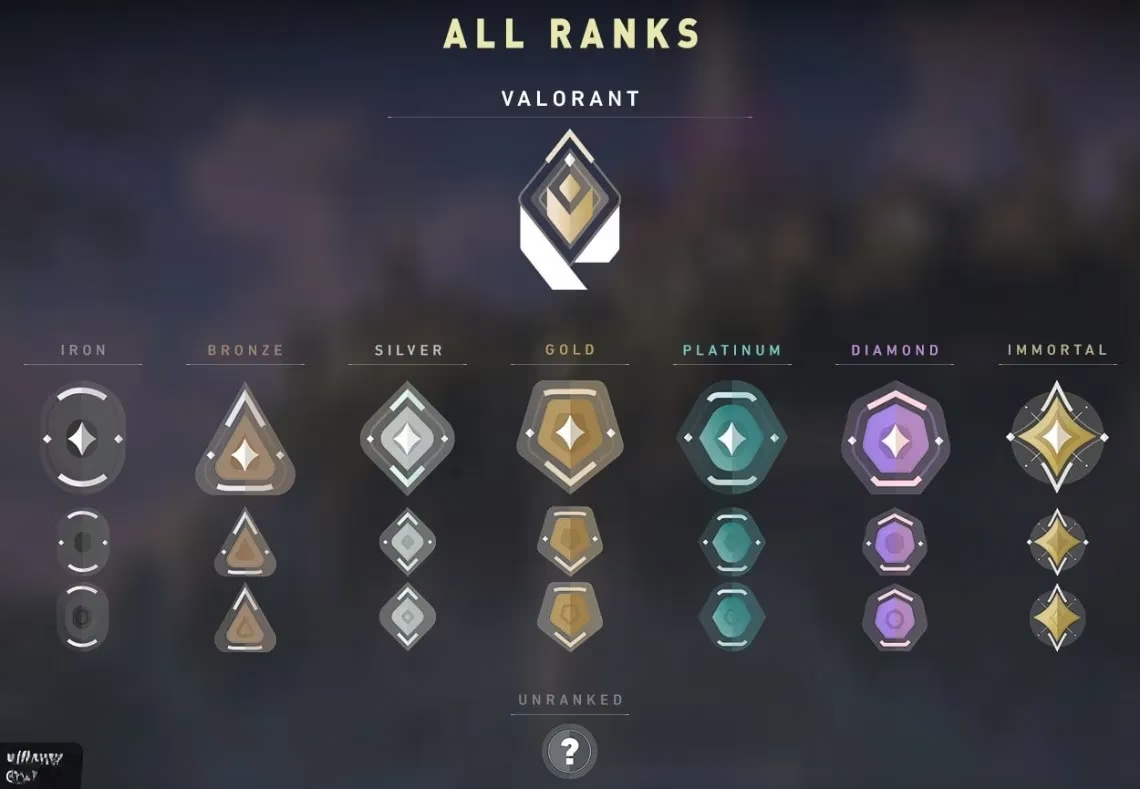
The leak came courtesy of a Reddit user, u/FloxaY, who shared an image revealing the full competitive hierarchy. The ranks, from bottom to top, read like a roadmap to mastery: Iron, Bronze, Silver, Gold, Platinum, Diamond, Immortal, and finally, Valorant. Each tier had three sub-levels to climb through, except for the peak Valorant rank, which stood alone at the very top. Imagine grinding from Silver I to Silver III before even sniffing Gold I—that was the journey every player faced. It mirrored the structure of League’s own tiered ladder, and that familiarity comforted legions of Riot devotees.
At the time, the official plan had been to launch without a ranked mode. Valorant’s lead game designer, Trevor “Classick” Romleski, had confirmed that expectation early on. But as the beta exploded in popularity, something shifted. Either Riot accelerated their development timeline, or the sheer number of leakers combing through every file made it impossible to keep secrets. The ranked system became the talk of the town, and players poured over the leaked tiers, speculating about MMR algorithms and the prestige of that elusive Valorant rank.
Fast forward to 2026, and it’s amusing to look back at the frenzy those leaks caused. The ranked mode didn’t just launch on time for the full summer release—it evolved into one of the most polished competitive ecosystems in esports. The early structure has seen tweaks, sure, but the backbone remains recognizable: eight ranks, three divisions each, and a pinnacle that fewer than 0.1% of players ever reached in the first few acts. The leaked image became a piece of internet history, a snapshot of a game on the cusp of greatness.
What made the system so sticky? It wasn’t just about the tiers. Riot introduced a transparent performance tracker, a season-based reset that kept things fresh, and heavy penalties for toxicity that maintained a cleaner environment than many rivals. The climb from Iron to Immortal rewarded teamwork and mechanical skill equally, forcing players to master both gunplay and agent abilities. And when you finally hit Radiant—the renamed top rank introduced in Episode 3—the feeling was pure euphoria. Yes, what was once called Valorant is now Radiant, a testament to how even a leaked foundation can evolve with the times.
The decade since the beta has seen Valorant morph from a promising shooter into a titan of competitive gaming. The ranked mode, born from a leak and refined through years of community feedback, now supports a thriving esports scene with international leagues and a world championship that rivals the biggest names in sports. Every player who queues up for competitive play today walks the same path that millions did in 2020: dreaming of that final promotion match, heart pounding, as the screen reveals their new rank.
It’s a story that proves how a small piece of leaked information can become a cornerstone of gaming culture. Riot may have planned to surprise the world with their ranked reveal, but the community’s appetite turned an early look into a rallying cry. So here we are in 2026, still climbing, still grinding, and still chasing the ghost of that leaked Valorant rank—a legacy that started with a single Reddit post.