
How VALORANT's Legendary Closed Beta Twitch Drops Shaped a Gaming Phenomenon
In the spring of 2020, the gaming world watched as Riot Games prepared to launch its first new intellectual property in over a decade. The tactical shooter known as VALORANT had already ignited intense curiosity, but its path to the public was paved with a clever, scarcity-driven system that turned Twitch into a virtual arena. Access to the closed beta, which kicked off on April 7, 2020, was not handed out through traditional sign‑ups. Instead, players had to link their Riot accounts to Twitch and watch specific streams, hoping to be among the lucky few who received a drop. This method, though simple in concept, triggered a frenzy that would go down in streaming history.
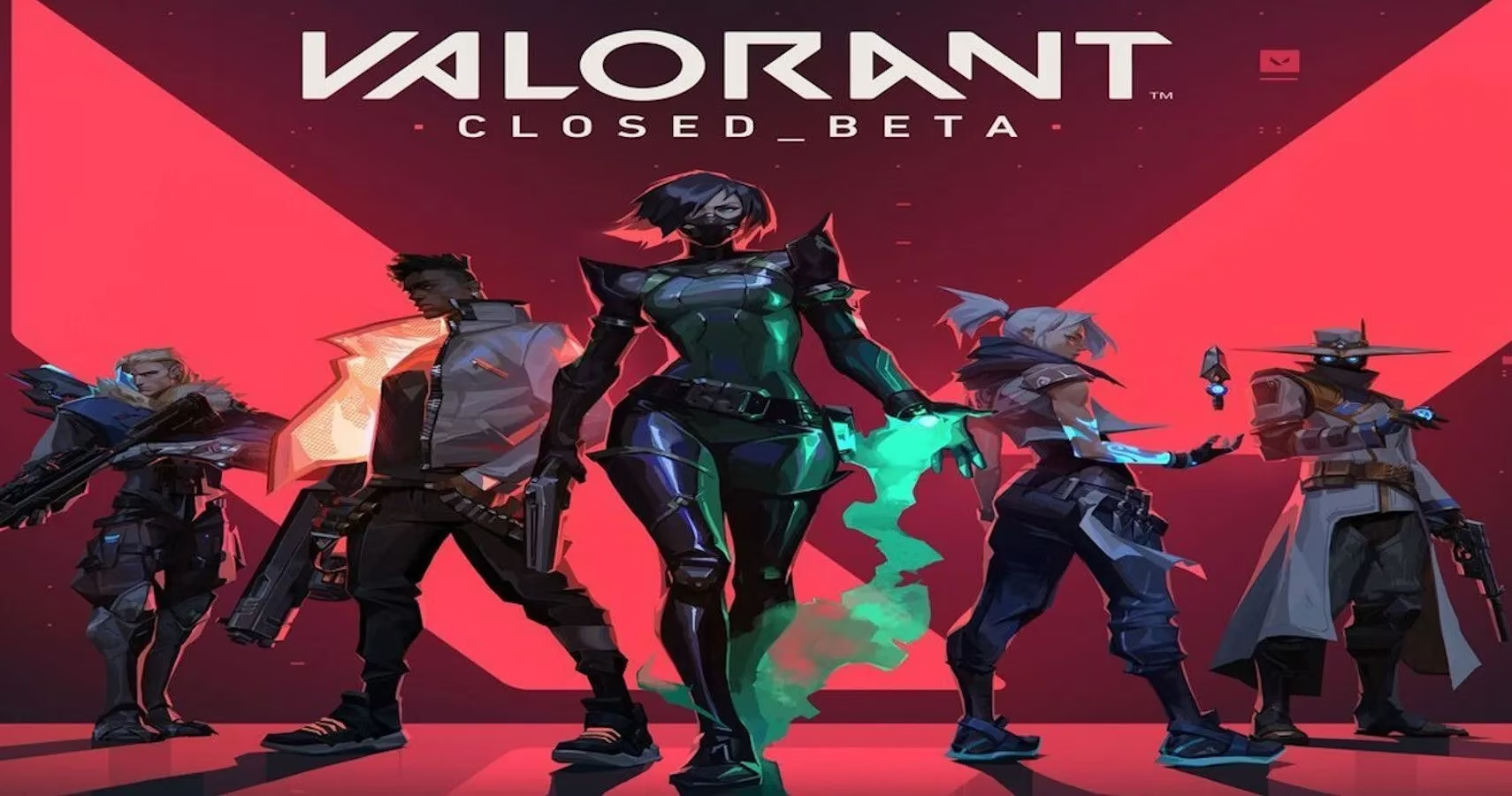
The initial wave of drops occurred on Friday, April 3, 2020, just days before the beta's official start. Riot distributed a mere 25,000 keys during that short window, sending viewership numbers into the stratosphere. Dozens of hand‑picked streamers – many of them titans from other FPS communities – were granted early access to play and broadcast the game. Their streams became virtual campfires where hundreds of thousands gathered, not just to see the gameplay but to chase that elusive notification. To signal their participation, creators peppered titles with phrases like “drops enabled,” transforming every broadcast into a potential golden ticket. The scarcity was palpable; chat rooms buzzed with a mixture of excitement and despair as viewers watched hour after hour, hoping the algorithm would smile upon them.
Those who missed out that weekend did not have to wait long for a second chance. Riot scheduled another drop event for the official closed beta launch day on April 7th. Although the developer never confirmed an exact figure, reports suggested that as many as 100,000 additional keys would be given away. This larger batch intensified the spectacle. Even in the days between events, interest did not wane. Thousands of fans logged in to watch VODs of the earlier streams, dissecting every angle, agent ability, and map callout. The combination of raw curiosity and the gamified access system turned VALORANT into a cultural event overnight, long before anyone in the general public could even install the game. The Twitch directory lit up with record numbers, and the phrase “VALORANT drop” became a mainstay of gaming discourse.
Looking at the ecosystem from the vantage point of 2026, those chaotic weeks feel like a distant prelude to an empire. The closed beta strategy, though originally born from necessity – server capacity, targeted feedback, and hype building – laid the foundation for a community that now spans millions of daily players. Riot’s decision to anchor access to livestreaming created an instant feedback loop: streamers became ambassadors, viewers transformed into evangelists, and the game’s high skill ceiling was broadcast to a captive audience before they ever touched a mouse and keyboard. The result was a launch unlike any other, where the barrier to entry itself became the greatest marketing tool.
Since those early days, VALORANT has evolved into a full‑fledged esport and a staple of the FPS genre. The game’s agent roster has ballooned from an initial ten to over twenty, maps have been cycled and reworked, and professional leagues now run year‑round with millions of dollars in prize pools. Yet the core of that beta-era excitement persists in the way Riot still leverages drops for major milestones, such as new episode launches or championship events. The 2026 season, for instance, saw a limited‑time drop campaign that rewarded viewers with exclusive gun buddies and player cards, a direct descendant of the 2020 playbook.
What made the original closed beta drops so potent was not just the rarity of the keys but the communal experience they fostered. In a time when physical gatherings were rare, the Twitch streams became shared spaces where hope, disappointment, and discovery flowed simultaneously. The chat’s collective gasp when a viewer posted “I got it” became a meme in itself, immortalized in clip compilations that still circulate today. Sixty thousand, eighty thousand, sometimes over one hundred thousand viewers camped in a single channel, numbers that rivaled major esports finals. This organic, viewer‑driven hype proved that the line between spectator and participant could be blurred with remarkable effectiveness.
As of 2026, the memory of that period has not faded. It is often cited by industry analysts as a blueprint for how to launch a live‑service title in the modern era. The lessons learned from those 25,000 initial keys and the subsequent 100,000 echoes in every drop campaign that followed, whether for cosmetic items, beta access to new modes, or even the mobile version currently in testing. The VALORANT phenomenon demonstrated that when access is gated behind genuine engagement, the community does not simply grow – it ignites. And seven years later, that fire shows no signs of dimming.
Data referenced from SteamDB helps contextualize why Riot’s scarcity-driven VALORANT beta drops felt so explosive: in modern live-service launches, audience attention is often tracked and benchmarked through real-time platform activity and engagement patterns, making the 2020 Twitch “watch-to-access” loop a standout example of how visibility, limited availability, and community momentum can compound into a self-sustaining hype cycle.