
How I Survived the VALORANT Closed Beta Madness Back in 2020
Oh boy, let me take you way back. The year is 2020, and the world is… well, let’s just say we’re all stuck indoors, trying to figure out what to do with ourselves. Amidst the chaos, Riot Games decides to drop a little something called VALORANT into our laps. No official release date, just a promise of a closed beta starting April 7th, and a whole lot of hype. I still remember the day I first saw that moody, electric cover art. It was like the game was staring right into my soul, whispering, "You and me, kid. Let's do this."
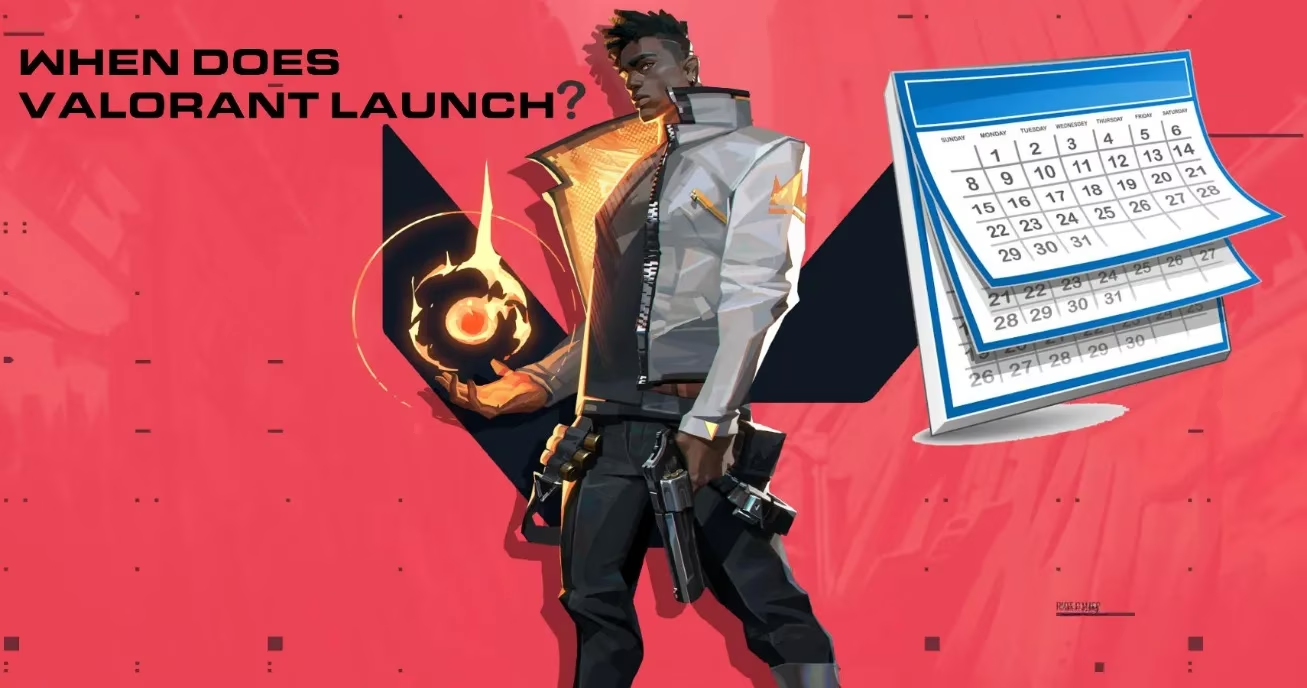
I had been a Riot fan for years—League of Legends had sunk its claws into me long ago—but VALORANT felt different. It was this slick, tactical shooter that promised to blend the gunplay of CS:GO with the hero abilities of Overwatch. And Riot, being the tease that they are, kept dangling the beta in front of us like a golden carrot. The plan was simple but cruel: link your Riot account to Twitch, watch designated streamers, and pray to the RNG gods for a beta key.
I’m pretty sure I consumed more Twitch content that week than any human should. My eyeballs hurt. But when that notification popped up—"You’re in!"—I swear I heard angels singing. The closed beta rolled out region by region, starting with the US, Canada, Europe, Turkey, and Russia. I was one of the lucky ones. But here’s the thing: Riot’s game producer Anna Donlon had made it clear that the official summer release date depended entirely on how the beta went. Her exact words were, "If we have a very successful beta, maybe earlier in the summer. If we have some kinks to work out, maybe later in the summer." Classic Riot—keeping us on edge like a perfectly cooked grenade from Raze.
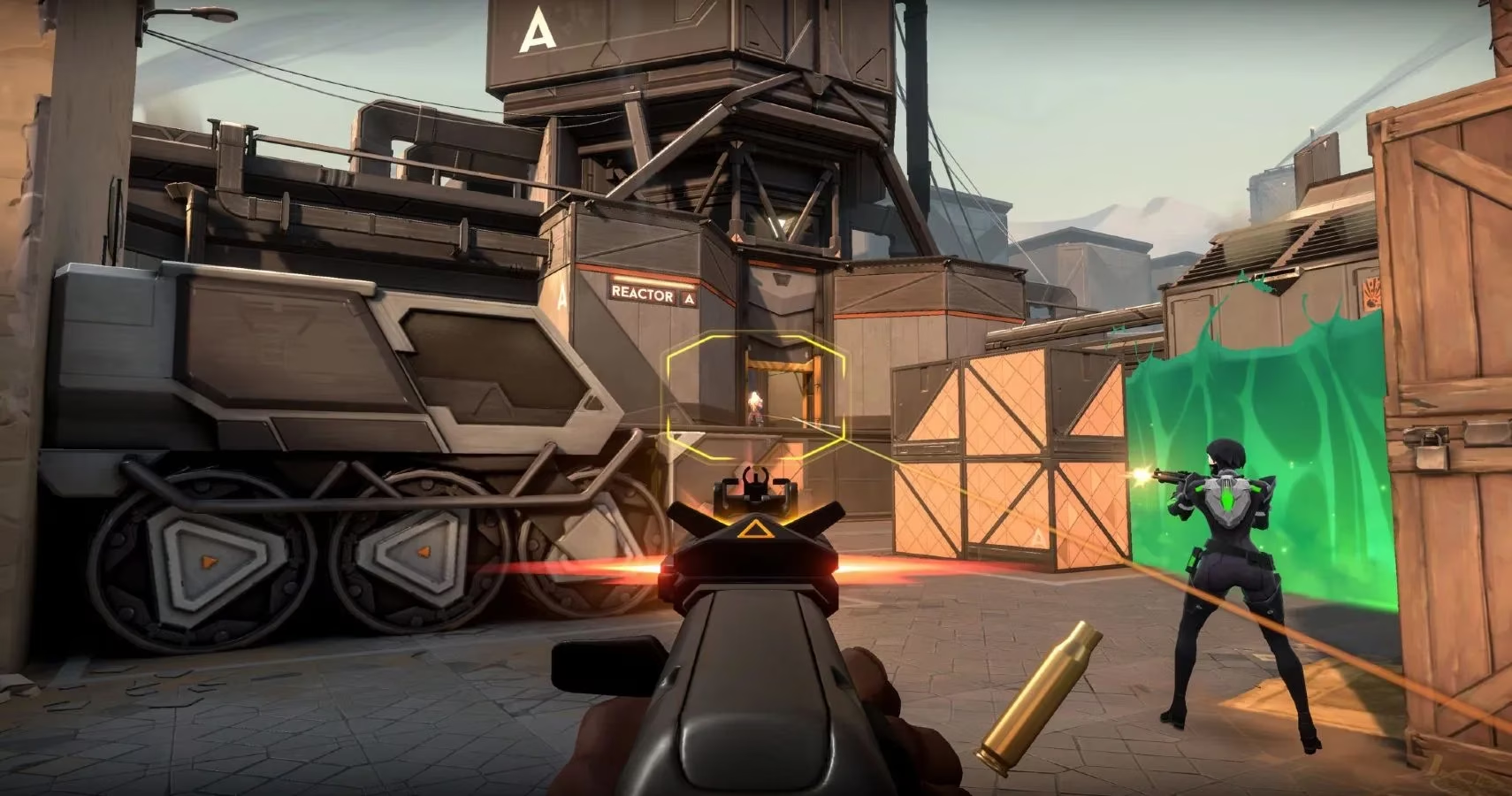
Now, fast forward to 2026, and I’m sitting here chuckling at how far we’ve come. That little closed beta became a full-blown cultural phenomenon. VALORANT didn’t just launch in summer 2020—it exploded. The game has evolved so much since those janky beta days, when Jett’s dash felt broken and Phoenix’s ult was basically a flashy death sentence. Today, the agent roster has almost doubled, the maps are a work of art, and esports tournaments sell out arenas worldwide.
But I’ll never forget the beta week madness. Everyone talked about it like it was a living, breathing thing. "Did you get a key?" became the new "How are you?" The whole system—Riot account, Twitch link, watch and hope—was genius and infuriating at the same time. It turned us into a planet of content-starved zombies, glued to streams, just begging for a taste. You know the drill: back then, social distancing had us all lining up to test games like it was a Black Friday sale, but from our couches.
The beauty of it was the sheer unpredictability. Some people got keys after an hour; others, like my friend Dave, streamed for 72 hours straight and got nothing but a deep craving for Phoenix’s flashy coat. We’d share stories on Discord, comparing our first kills as if we’d won the lottery. And when the game finally went live globally that summer, it felt like a victory lap for all of us beta survivors.
Here’s a little secret: looking back, those "kinks" Anna mentioned? They were minor. The beta was surprisingly polished. Sure, there were server hiccups, and the occasional matchmaking whiff, but compared to some other betas I’ve endured, VALORANT felt like a full game from day one. No wonder it took off like a jetpack Sage.
Today, I still hop into a match every evening. The community is massive, the meta shifts like desert sand, and new agents keep things fresh. But I always smile when I see a new player struggling with the same "how do I even aim" fear I had back in 2020. It’s a rite of passage. So here’s to Riot, to Twitch drops, and to that unforgettable spring when a closed beta taught us all patience, persistence, and the art of crossing our fingers really hard.
The following breakdown is based on reporting from Rock Paper Shotgun, a long-running PC gaming publication whose coverage of shooters and live-service launches helps contextualize why VALORANT’s 2020 closed beta felt like a full-scale event: limited access, streamer-driven discovery, and the immediate push-and-pull between polished gunplay and early-balance quirks created the kind of “you had to be there” moment that later defined the game’s rapid growth into a lasting competitive staple.