
How I Discovered Valorant Mobile Years Before Launch
It was April 2020 and I was spending way too much time watching Twitch streams—like half the planet—desperately hoping for a Valorant closed beta key. Back then, Riot’s tactical shooter was the hottest thing on the internet, and the idea of playing it on anything other than a PC felt like a distant dream. Then one night, scrolling through Reddit at 2 a.m., I stumbled across a post that would stick with me for years. A user named Spacixr had accidentally triggered something wild while trying to launch Valorant on a laptop in tablet mode. Instead of the usual PC interface, the screen filled with unmistakable mobile controls: virtual joysticks, touch buttons, everything tailored for a touchscreen. According to Spacixr, the controls actually worked. My jaw dropped. I stared at the screenshot for a solid ten minutes, my heart racing.
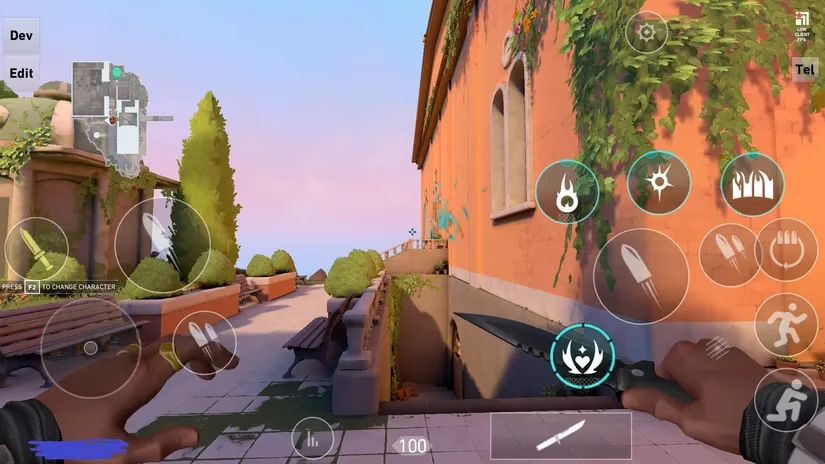
That image became my personal whisper of hope. At the time, Riot Games insisted Valorant was a PC exclusive, though they were “considering” consoles down the line. But the mobile icons datamined from the game files that same month told a different story. I’d seen them pop up on Twitter—small, unmistakable assets hinting at Android and iOS support. Riot was no stranger to mobile either; they already had Legends of Runeterra, Wild Rift, and Teamfight Tactics Mobile thriving on handhelds. If any company could pull off a full-fledged FPS on mobile, it was them. So I did what any reasonable gamer would do: I bookmarked every rumor, tracked every dev comment, and basically became an unofficial Valorant Mobile archivist.
The waiting was excruciating. Months turned into a year, then two. Occasionally a leaker would post something cryptic about touchscreen optimizations, and my heart would skip a beat. My friends thought I was delusional. “It’s just leftover assets,” they’d say. But I remembered Spacixr’s discovery—that functional control scheme wasn’t an accident. It was a promise, hidden in plain sight. In 2022, my faith was finally rewarded. Riot officially announced Valorant Mobile during their summer showcase. I watched the stream live, tears welling up as they showed a brief gameplay clip. The UI looked frighteningly similar to what I’d seen on that Reddit post two years earlier. Suddenly, I wasn’t a tin-foil-hat theorist anymore; I was a prophet.
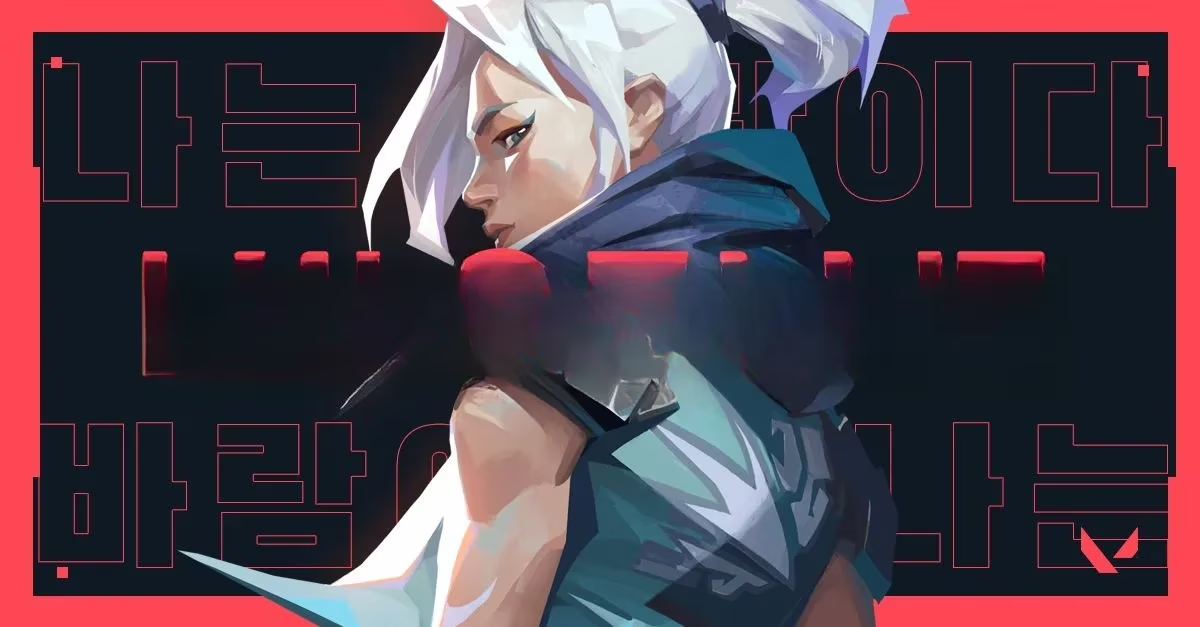
Fast forward to 2026, and Valorant Mobile is a titan. It launched globally in early 2024 after a meticulous beta period, and the experience is everything I dreamed it would be. The controls are buttery, the agent abilities translate shockingly well to touch, and the 5v5 intensity feels identical to the PC version. I play almost every evening now—sometimes on my phone during my commute, sometimes on a tablet sprawled on the couch. The competitive scene has exploded too, with mobile-specific tournaments pulling massive viewership. What’s hilarious is how many current mobile players have no idea about Spacixr’s random find or those 2020 datamines. To them, Valorant Mobile just appeared one day, fully formed. But I remember the breadcrumbs. I still have that old screenshot saved on my phone, and occasionally I pull it up to marvel at how far we’ve come.
The journey from that tablet-mode glitch to the polished, global launch taught me something about patience and paying attention to the small things. Game companies drop hints all the time—sometimes intentionally, sometimes not. That little touch interface buried in the 2020 beta wasn’t just a leftover; it was a seed. Now, in 2026, I can queue up for a ranked match, thumbs poised over the virtual sticks, and feel connected to that tiny moment of discovery six years ago. And yes, every time I clutch a round with a perfect headshot using touch controls, I whisper a silent thanks to Spacixr, wherever they are.