
How Brax's Leap of Faith to T1 Valorant Became a Defining Moment in Esports
You know, back in early 2020, the esports world was buzzing with rumors about this mysterious new game from Riot. Nobody had played it, nobody had seen real gameplay, but the hype around Project A—later revealed as Valorant—was already through the roof. I remember scrolling through Twitter when I saw the announcement: T1 had just signed Braxton "Brax" Pierce as their first-ever tactical FPS player. My first reaction? "Wait, the Swag? The CS:GO prodigy who got banned?" It felt like a movie script unfolding in real time.
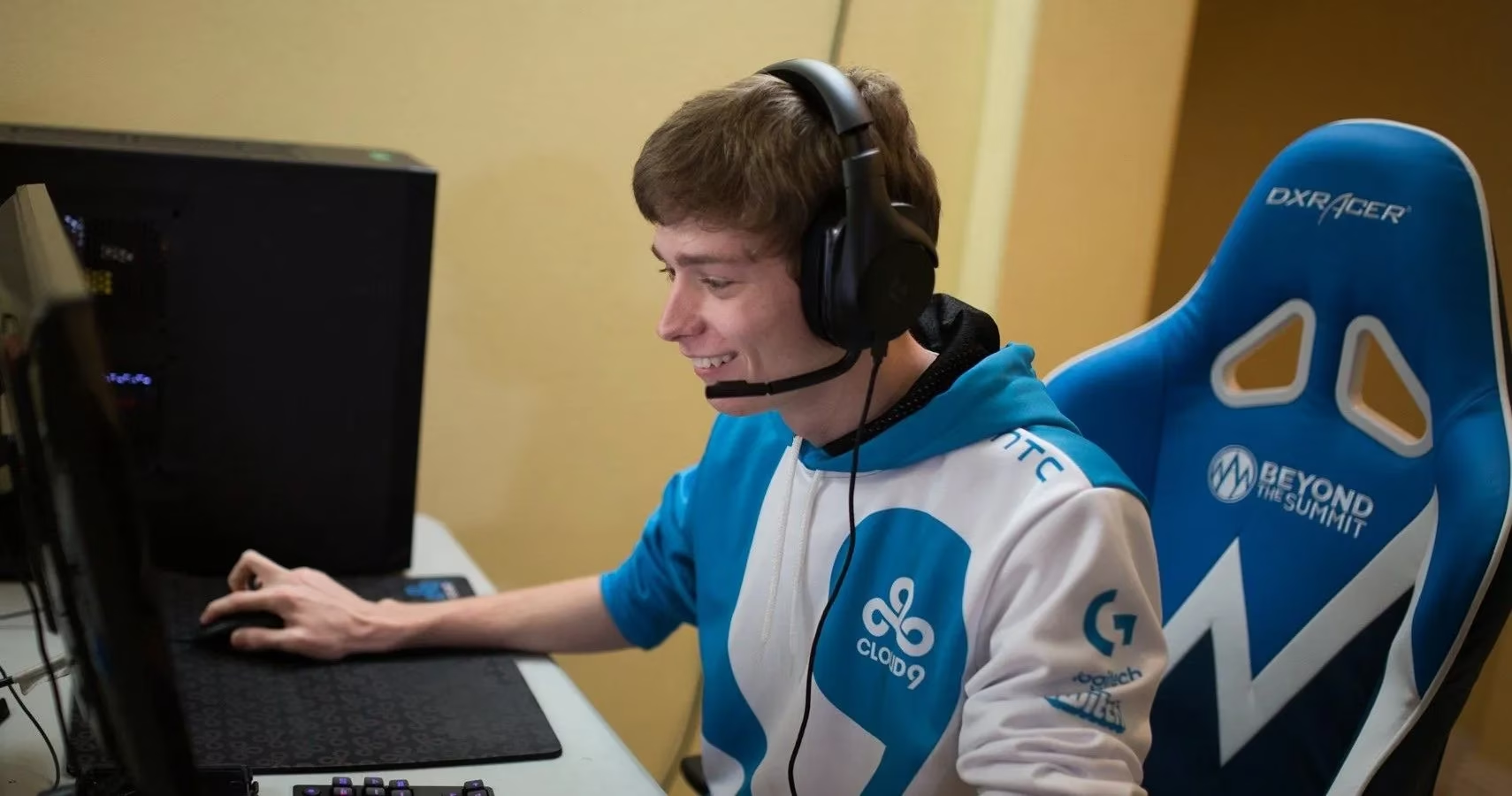
Back then, Brax was a legend with an asterisk. As a teenager in the iBUYPOWER roster, he was one of North America's brightest Counter-Strike stars—insane aim, deep game sense, and the swagger to match. Then came the match-fixing scandal in 2015. Valve dropped the banhammer permanently, and just like that, his tier-one career evaporated. He ground through smaller events, built a massive streaming audience, but everyone knew he still had elite firepower. When he announced his retirement from competitive CS:GO on February 28, 2020, it wasn't a sad goodbye. It was a declaration: "My main goal is to await the release of Project A and put my ambitions of being the best in the world to fruition." That quote has lived rent-free in my head for six years.
What made this move so wild was the timing. Valorant was still months away from its closed beta, let alone a full release. T1, a Korean organization famous for its League of Legends dynasty, was betting on an unreleased game and a player whose legacy was stained by a ban. They already had rosters in PUBG, Apex, Hearthstone, Fortnite, Overwatch, Dota 2, and Super Smash Bros—but this was their first step into tactical shooters. For Brax, it was his first time playing for an org outside North America after stints with Lazarus, iBUYPOWER, and Cloud9. The stakes were existential for both sides.
I'll be honest, the pessimist in me thought this could flop hard. How many "esports-ready" titles had crashed and burned by 2020? But Riot knew what they were doing. Valorant turned out to be this beautifully chaotic fusion of CS:GO's precise gunplay and Overwatch's ability-driven creativity. Set in a near-future Earth with agents hailing from real-world cultures, it hooked millions from the beta onward. And Brax? He didn't just adapt—he dominated. That match-forged understanding of angles, map control, and clutch psychology from his CS days transferred perfectly. Within a year, T1's Valorant roster became a force in the scene, and Brax was its tactical core, calling plays that looked like they were pulled straight from a chess master's brain.
Looking back from 2026, that signing feels like the first domino in a historic chain reaction. Valorant esports exploded into a global ecosystem with franchised leagues, sold-out arenas, and a new generation of stars. Brax never got to lift a Champions trophy as a player—injuries and roster shuffles eventually pushed him into a coaching role—but his influence is everywhere. He helped build T1's Valorant methodology from scratch and later mentored talents who now headline VCT international events. His journey from banned CS:GO prodigy to revered tactical mind is one of the greatest redemption arcs gaming has ever seen.
I still go back to his statement from that day: "I'm excited to announce I will be joining T1 as their first Tactical FPS player ever... I couldn't be more confident that we will accomplish great things." In the moment, it felt like hope wrapped in a gamble. Now, it reads like prophecy. T1's commitment to Valorant—and to a player many orgs were too scared to touch—set a template for how to enter a new esport with boldness and smart talent evaluation.
If you're new to the scene or just now digging into Valorant history, take a minute to appreciate how different things could have been. No Brax to T1 might have meant a slower start for the org, a more cautious approach to roster building, and maybe even a completely different meta evolution in early competitions. Instead, we got a story of redemption, a lesson in trust, and a reminder that the best players find a way to win no matter the game.
Here's a quick timeline to put it in perspective:
-
2015: Brax banned by Valve for match-fixing.
-
2016-2019: Plays in smaller events, builds a massive streaming career.
-
Feb 2020: Retires from CS:GO, announces focus on "Project A."
-
Mar 2020: T1 signs Brax as first Valorant player.
-
Jun 2020: Valorant launches, T1 Valorant debuts.
-
2021-2023: Brax becomes a staple of competitive Valorant, secures multiple regional titles.
-
2024: Transitions to coaching and content creation, helps T1 Academy develop.
-
2025-2026: Still a key figure in T1's Valorant division, now a strategic advisor.
That original T1 gamble paid off in ways nobody could fully predict. And while the game has evolved dramatically—new agents, maps, meta shifts—the core philosophy Brax brought remains: disciplined fundamentals, relentless adaptation, and a little bit of that old-school swagger. 🎯