
How a Squad of Salty CS:GO Fans Tried to Review-Bomb Valorant Into Oblivion
Back in Valorant's launch week, a dedicated crew of keyboard warriors decided the best way to express their feelings about a free-to-play tactical shooter was to carpet-bomb its Metacritic page with zeroes. One could almost admire the commitment if the reasoning weren't so transparently salty.
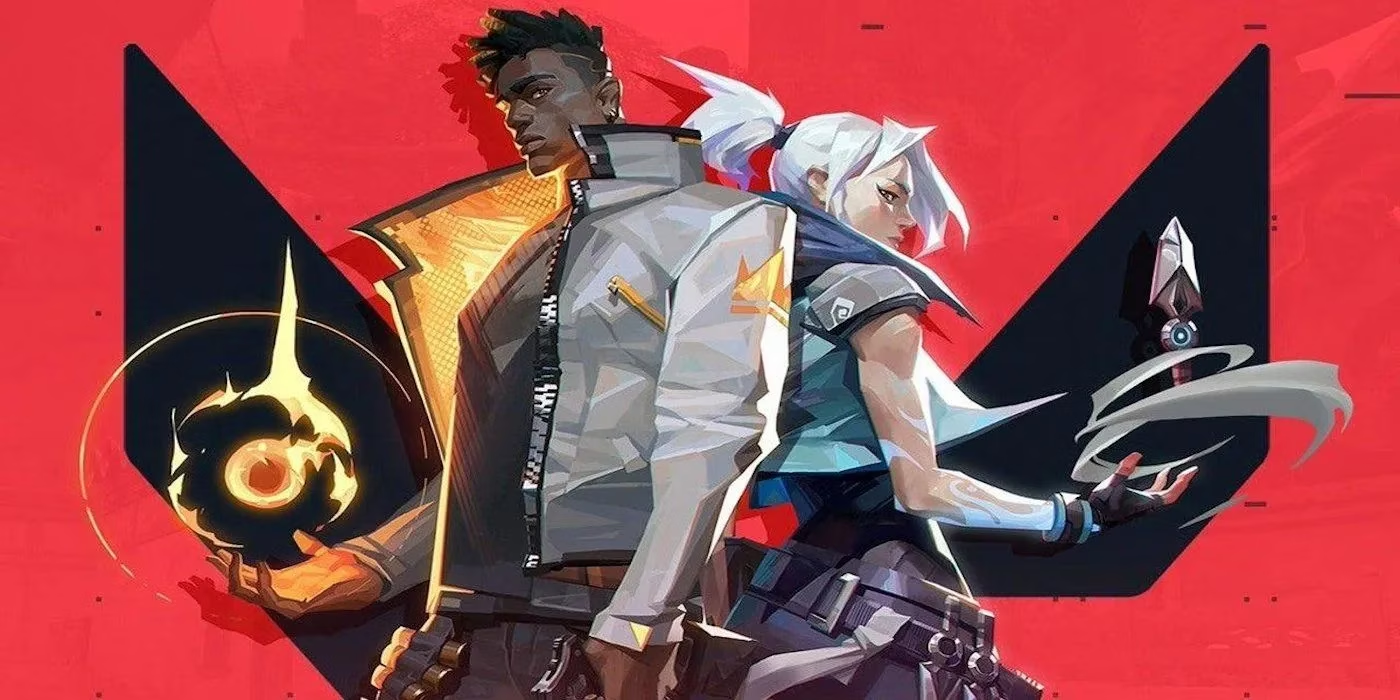
The culprits? Well, no one sent out a signed confession, but the attached comments read like a greatest hits album from disgruntled Counter-Strike: Global Offensive loyalists. Apparently, some folks took one look at Valorant's bomb sites, buy phases, and headshot-centric gunplay and decided it was a 'CS:GO clone' with terrible graphics, slow pacing, and the most boring arsenal since the invention of the rubber band. A few reviews even dragged Valorant's anti-cheat software into the mud, because nothing says fair criticism like blaming a rootkit for your own aim.
The complaint department's greatest hits included:
-
'It's just a CS:GO clone' — because no two shooters can share a concept without someone getting territorial.
-
'The graphics are terrible' — a bold take for a game clearly aiming for readability over photorealism.
-
'The pacing is slow' — translated: 'I rushed mid and got instantly deleted.'
-
'The guns are boring' — because every weapon needs to be a laser cannon, apparently.
-
'Vanguard is basically spyware' — the anti-cheat debate that never dies.
Of course, calling Valorant a clone is a bit like calling a taco a sandwich because both involve bread-adjacent things. Sure, Riot Games borrowed a few pages from the Counter-Strike playbook, but they also stirred in enough Overwatch-style ability chaos to make the recipe feel fresh. Some hardcore FPS purists absolutely hated that mix. Others thought it was the best thing to happen to the genre since someone invented the phrase 'just one more round.'
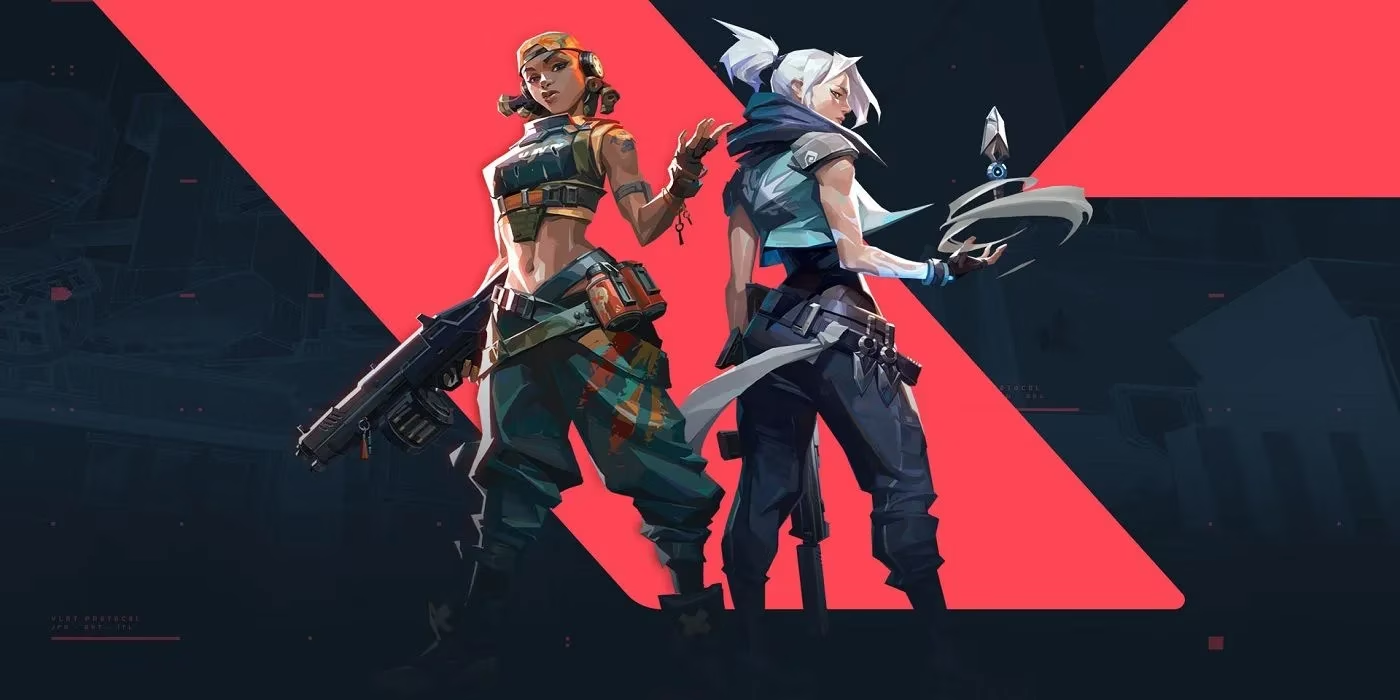
By the time the dust settled on that initial wave, Valorant had racked up more than 1,500 fan reviews on Metacritic, with over half of them negative enough to make a rainy Monday look cheerful. The resulting user score sat at a whopping 5.7 out of 10. Meanwhile, the critic score stood at 83 out of 100, with only one mixed review in the bunch. That gap is less a difference of opinion and more a tale of two completely different realities.
| Scoreboard | User Reviews | Critic Reviews |
|---|---|---|
| Score | 5.7 / 10 | 83 / 100 |
| Sample size | 1,500+ reviews | A much smaller, less rage-filled group |
| Most common take | 'CS:GO clone with terrible graphics' | 'Actually pretty solid' |
| Percentage of fury | High | Low |
The suspicious part? The sheer number of 0 scores. Valorant's official release wasn't dramatically different from its beta, which had been showered with praise. A quality dip that steep would require the game to spontaneously uninstall itself every other match, not merely anger a subset of CS:GO fans who were still waiting for a new operation. A five-year-old could spot the foul play from orbit.
But here's the kicker: review bombs don't hit free-to-play games the same way they hit sixty-dollar titles. If someone wants to know whether Valorant is worth their time, they can download it, warm up a few rounds, and decide for themselves without spending a dime. No pre-order refund drama. No buyer's remorse. Just a free download and a quick lesson in why Jett players keep whiffing their knives.
Riot Games had bigger plans anyway. Fresh off turning League of Legends into both a casual time-sink and a legitimate esport, the studio wanted Valorant to fill a similar role in the FPS world. Within its first five days, the full version was only beginning to find its audience and competitive scene. Review scores, especially ones manipulated by angry internet brigades, weren't exactly going to stop that momentum.
Even looking back from 2026, the whole saga feels like a classic case of loud minority versus silent majority. Valorant long since outgrew that launch-week tantrum, built a massive player base, and turned 'review-bombed on Metacritic' into a fun bit of gaming trivia instead of a lasting scar. The lesson? If you're going to review-bomb a free game, at least bring better insults than 'clone.' The internet has standards, after all. Well, sort of.