
FragPunk’s Bid to Break the Counter-Strike and Valorant Duopoly
For years, the tactical shooter space has been shaped like a binary star system: Counter-Strike 2 and Valorant orbit one another, each holding millions of players in place with different kinds of gravity. Counter-Strike 2 offers a raw, brutally precise test of aim and map control. Valorant wraps that same core in agents, magical utility, and a more colorful coat of paint. In 2026, FragPunk has stepped into that crowded sky not with a whisper, but with a deck of cards and a very deliberate plan. Developed by Bad Guitar Studio and backed by NetEase, FragPunk launched in early 2025 and has spent the time since attempting to prove that a third orbit is possible.
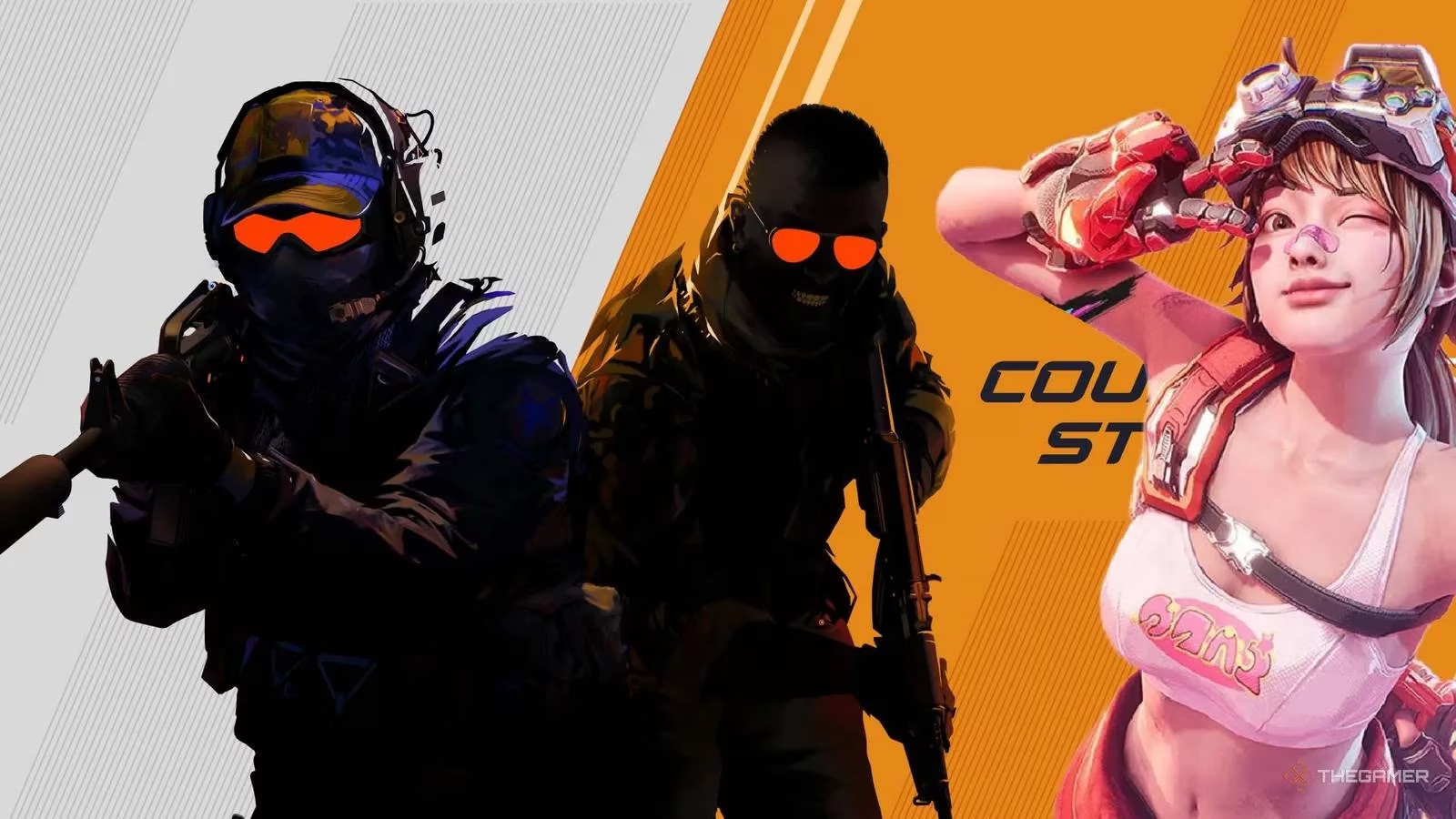
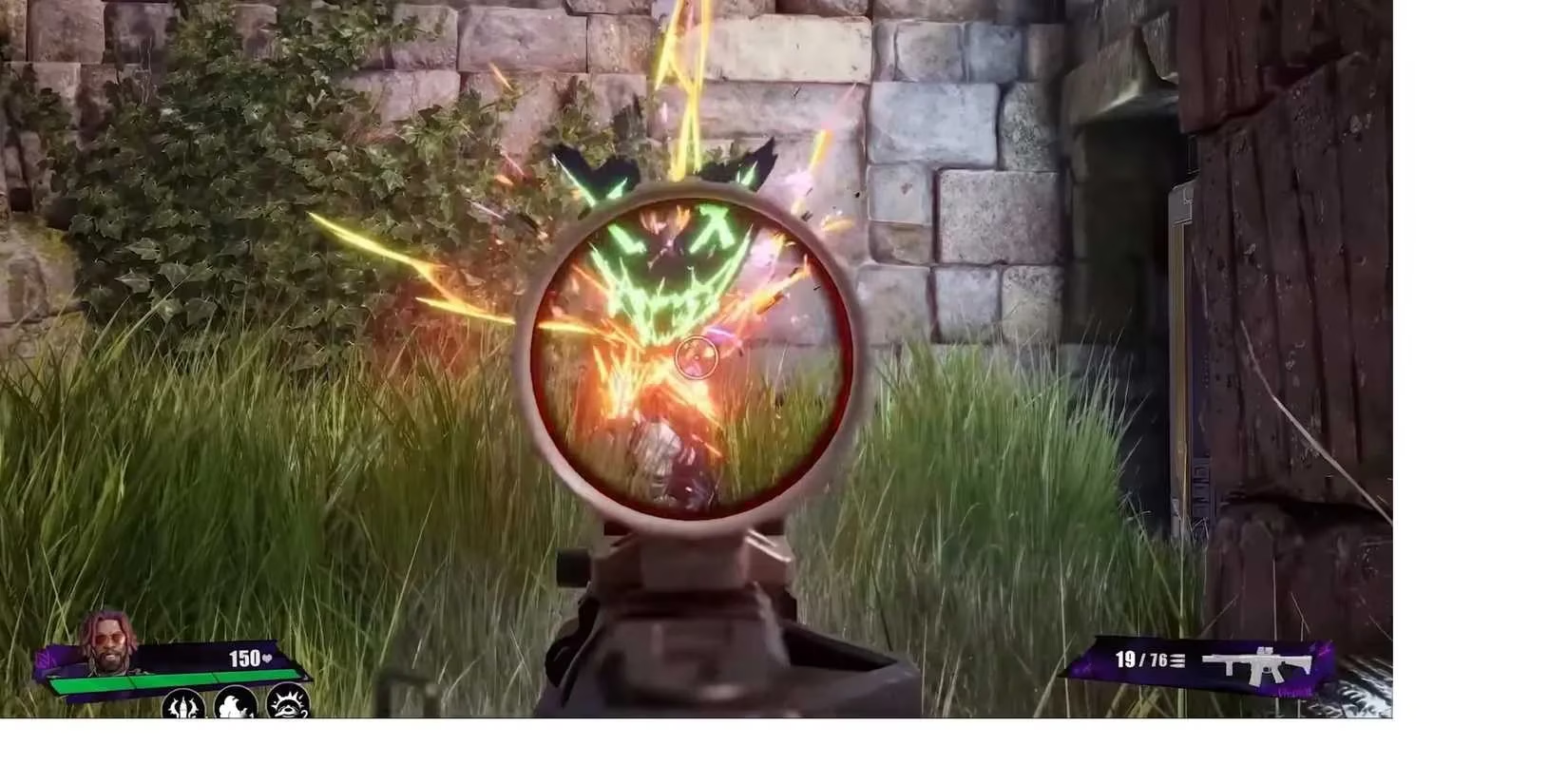
The tactical shooter market is not technically oversaturated, but it is brutally defended. Most publishers avoid attacking Valve and Riot simultaneously. FragPunk’s development team has nevertheless chosen to swing a crowbar made of deckbuilding timber at the seam where those two giants meet. During the game’s early alpha period, the shooting felt immediate and lively, the characters were varied, and the movement asked players to shed some habits from other shooters. One small but meaningful design choice forced constant adaptation: if a player died in a round, that player could not buy the same weapon again for the rest of the match. That rule acted like a soft chisel against comfort, breaking the familiar habit of reaching for the same assault rifle every single round and pushing players toward shotguns, marksman rifles, or other tools they might otherwise ignore.
A Card System That Rewrites Each Round
The most distinctive part of FragPunk is its card mechanic, which borrows a page from roguelike deckbuilders and drops it directly into a bomb-defusal structure. Over the course of a match, players collect cards and add them to a deck. During the preparation stage of each round, they spend points earned by eliminating opponents to vote for buffs. Some cards increase headshot damage by 25 percent. Others briefly shift the team’s perspective to an opponent’s viewpoint, creating a pulse of intel. These card effects do more than add power; they create a layer of strategic negotiation that Valorant and Counter-Strike do not possess.
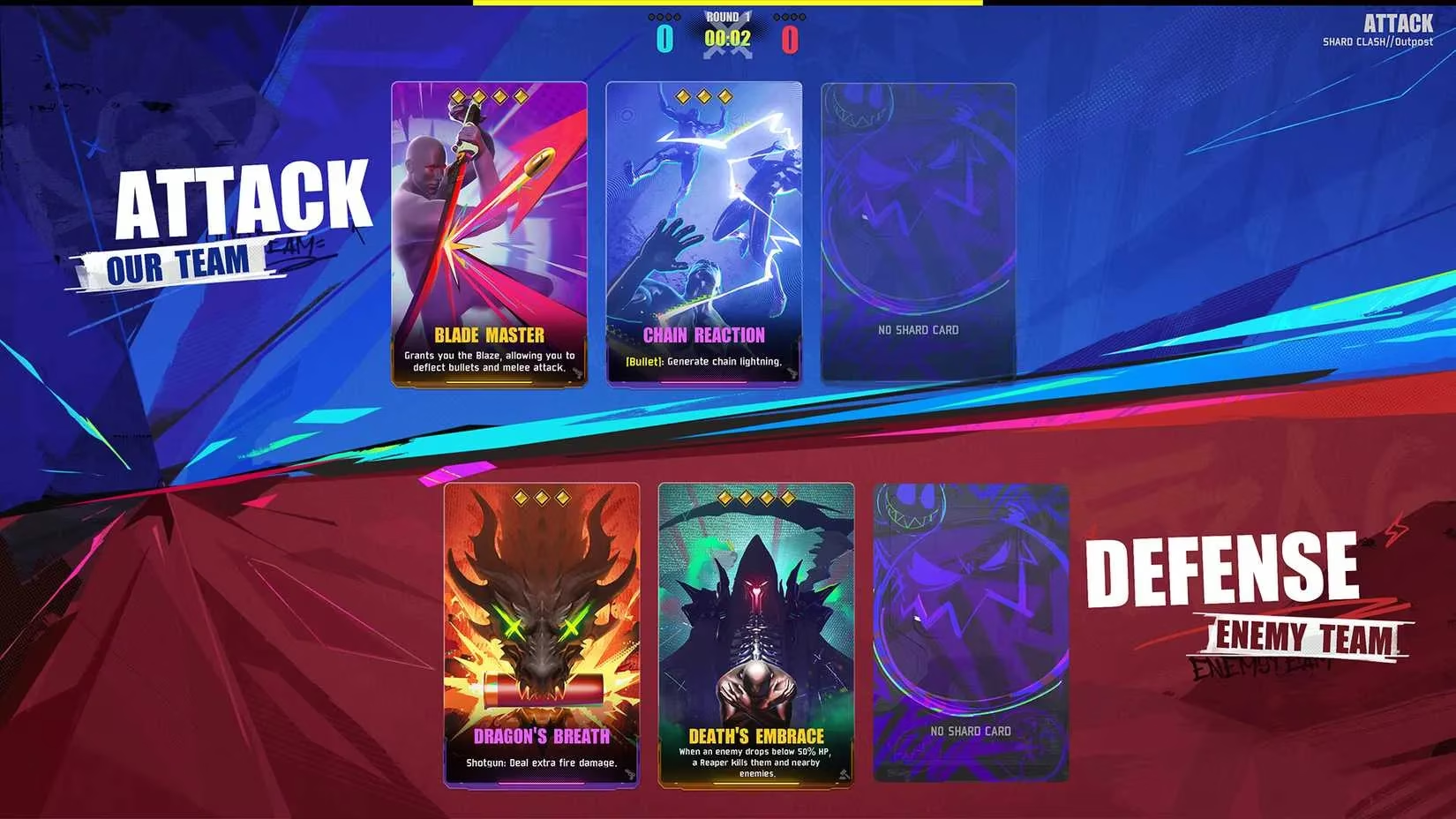
From a retention perspective, the cards function as a magnet wrapped in replayability. A player who wants access to the widest possible set of tactical options has a reason to keep returning. Cosmetics alone may not hold attention forever, especially in a genre where players already have deep emotional investment in existing inventories and status systems. If FragPunk can keep players engaged through deck growth rather than pure fear of missing out, it would stand apart from many live-service games. The early signs suggested that the team was aware of this possibility, though the long-term monetization path would ultimately determine whether that promise survived contact with the market.
Can the Duopoly Become a Trio?
The numbers from the era before FragPunk’s full launch were intimidating. Reports placed Valorant at around 28 million monthly active players, while Counter-Strike 2 averaged roughly 947,520 daily players in a single month, translating to a similar monthly scale. Those two communities existed in relative harmony, each feeding different appetites. A third game would need to persuade players who had already found their preferred rhythm to visit an unfamiliar orbit.
| Feature | Counter-Strike 2 | Valorant | FragPunk |
|---|---|---|---|
| Primary appeal | Precise gunplay, map control | Agents, abilities, style | Card-altered rounds, rapid adaptation |
| In-round loadout twist | Economy management | Agent economy and abilities | Death locks a weapon for the match |
| Meta variety | Utility-heavy, positional | Ability combinations | Deck buffs and tactical votes |
| Retention hook | Ranked mastery | Cosmetics, agents, battle pass | Card collection and deck growth |
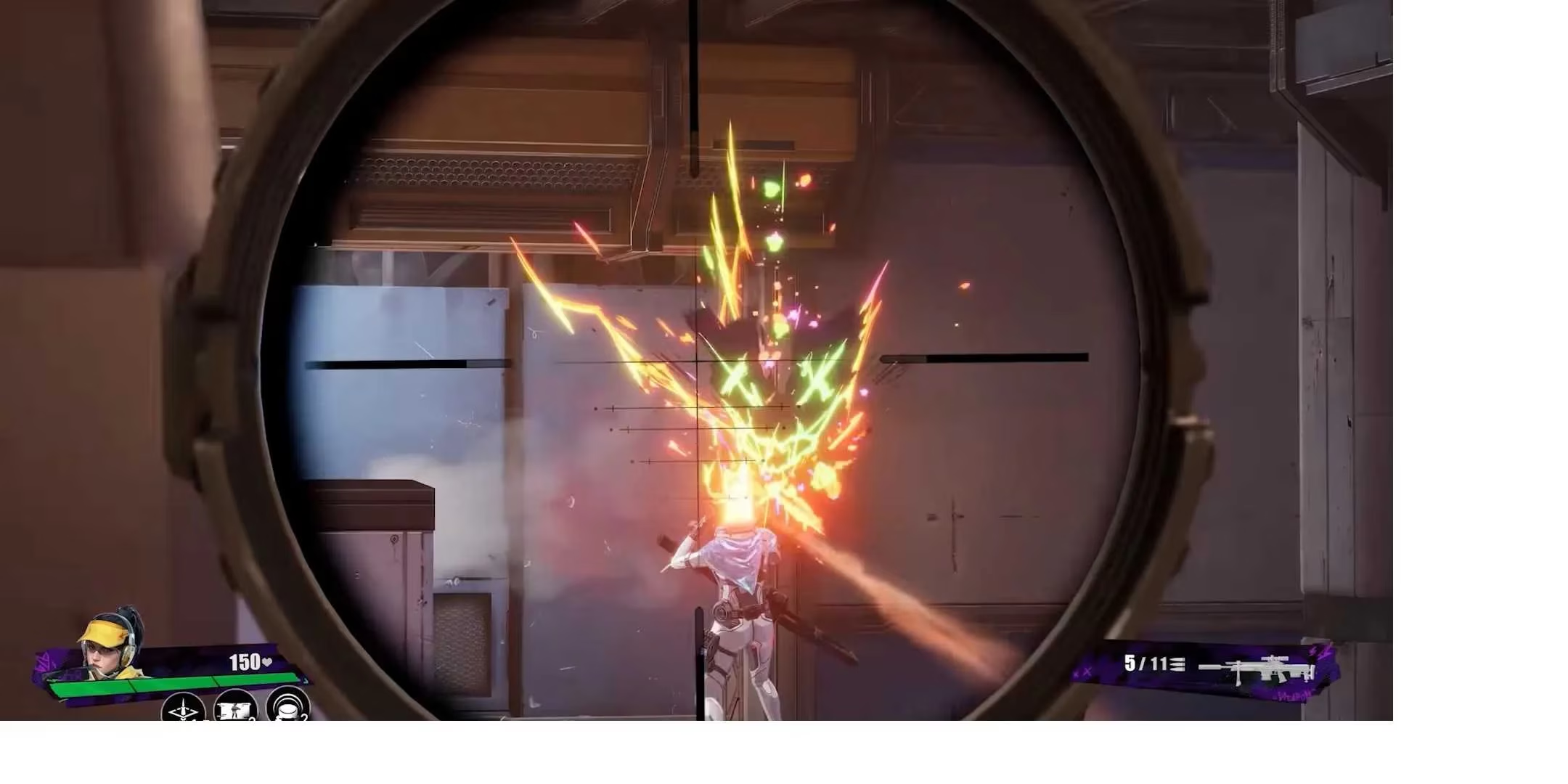
The comparison is not purely about mechanics. Counter-Strike began as a Half-Life mod, an underdog origin that eventually made it one of the most dominant games on Steam. FragPunk began with much larger institutional support, but inherited a harder task because the market now has far less empty space. A new tactical shooter cannot simply be good; it must be different enough to create a reason for switching, yet familiar enough not to feel alien. The card system is FragPunk’s strongest argument that such a balance is possible. It does not replace aiming, map sense, or communication. Instead, it layers a rotating strategic economy on top of those fundamentals, so that even repeated maps can produce unexpected textures.
By 2026, the game’s long-term place is still being written. A four-day alpha could not answer whether a third title could survive next to Counter-Strike 2 and Valorant, and even a strong launch would not guarantee permanence in a live-service landscape that consumes novelty quickly. Still, the initial shape is encouraging. FragPunk has the bright aesthetic, responsive shooting, and a card-driven twist that makes the familiar bomb-defusal formula feel like a deck waiting to be reshuffled. Whether that is enough to turn a duopoly into a trio depends on whether the game can keep offering reasons to return after the novelty has been dealt.