
Dot Crosshairs in Valorant: Tiny Dots, Big Headshots in 2026
In Valorant, the humble dot crosshair is the aiming equivalent of a quiet friend who suddenly wins every argument: small, unassuming, and shockingly effective. Instead of a busy cross shape, a dot crosshair puts one clean aiming point at the center of the screen. For players who want precision, headshots, and a setup that does not look like a tiny airport runway, it is a very tempting choice. In 2026, the debate has not changed much: some players swear by crosses, some by circles, and the dot loyalists keep quietly clicking heads while everyone else adjusts their settings for the fifth time.
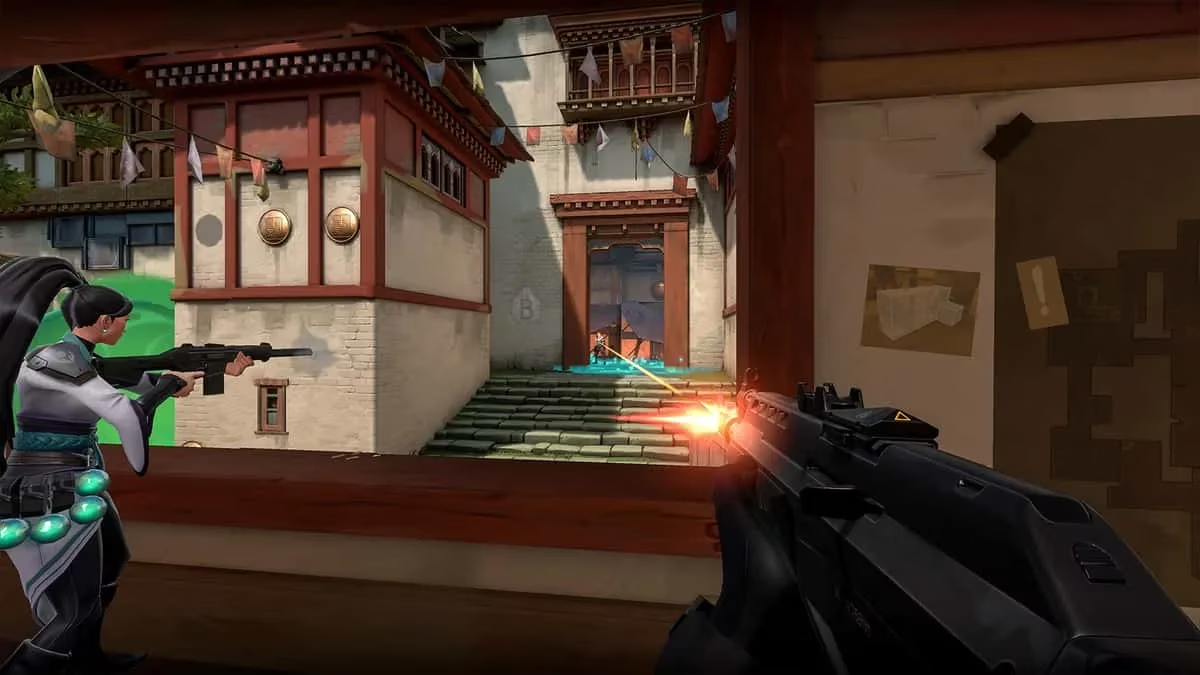
The dot crosshair is exactly what it sounds like. It replaces the traditional cross with a minimal dot at the center of the screen. That tiny mark tells the player precisely where the shot will land, assuming the aim is true and the enemy is not doing that deeply annoying strafe-dance. Pro players often favor this minimalist style because it removes visual clutter and keeps attention on the target. A dot does not offer excuses. It simply sits there, like a tiny referee, and judges every missed shot.
A dot crosshair is especially handy with the Vandal. The Vandal rewards crisp one-taps, and a dot makes the head a very clear target. When a player lands that first headshot, the dot also helps with a quick transfer to the next enemy. This is the kind of play that looks effortless in highlights and absolutely chaotic in a ranked match, which is part of the charm.
Why the Dot Has a Loyal Fan Club
The main appeal is precision. A dot crosshair gives the player an exact aiming point without extra lines pulling the eye in different directions. It is minimal, clean, and surprisingly customizable. Players can adjust color, size, outline, and shape. Some prefer a pure dot, some like an outlined dot for visibility, and some enjoy a tiny square-shaped dot because it feels a little more substantial without becoming a full crosshair billboard.
| Dot style | Personality | Good for |
|---|---|---|
| Pure dot | Minimalist monk | One-taps and clean aim |
| Outlined dot | Practical gremlin | Bright maps and messy backgrounds |
| Tiny square dot | Dot with shoulders | Players who want a bit more presence |
| Custom colored dot | Personal flair | Standing out without blocking the view |
The right dot crosshair can make a real difference, even if it looks like a tiny detail. A player who can see the dot clearly will aim more confidently. A player who cannot see it against a bright wall will spend half the round squinting like a detective in a bad movie. Visibility matters, and so does comfort.
Importing a Dot Crosshair Without the Drama
Valorant makes importing a crosshair profile fairly painless. The player copies a crosshair code to the clipboard, launches the game, clicks the gear icon in the top-right corner of the home screen, and opens the Settings tab. From there, the path is straightforward: go to the Crosshair Profile tab, click the downward-pointing arrow icon, paste the code into the text box, and hit Import. The game does the rest, which is ideal for anyone whose idea of technical support is turning the monitor off and on again.
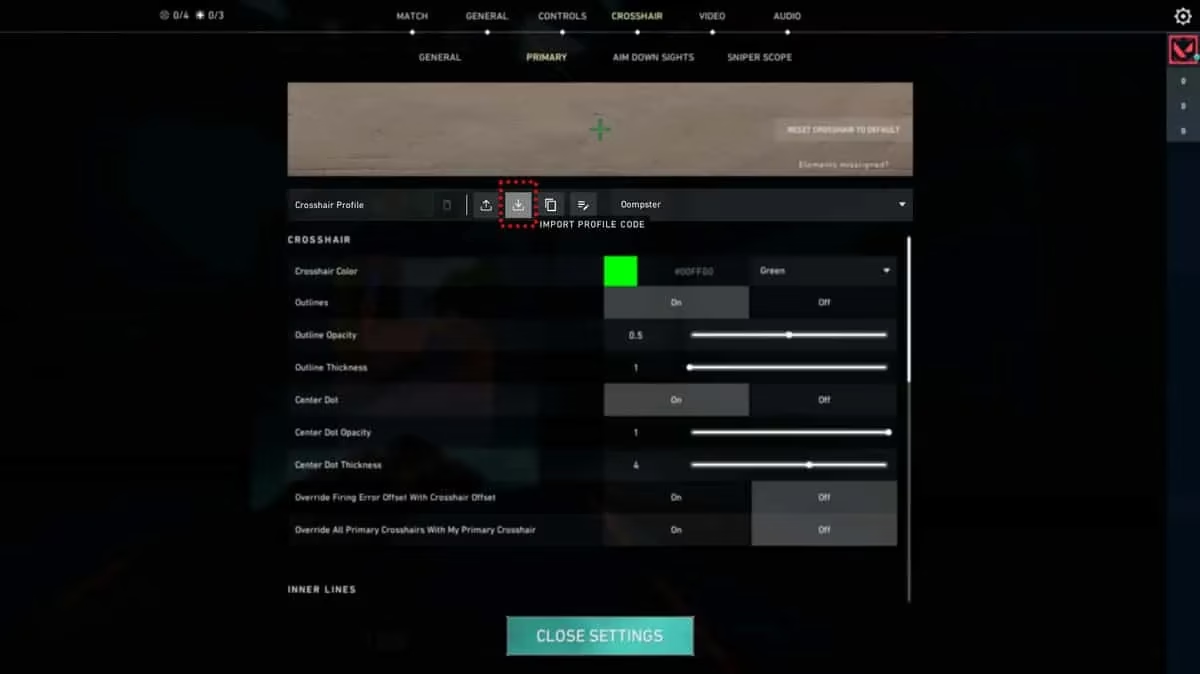
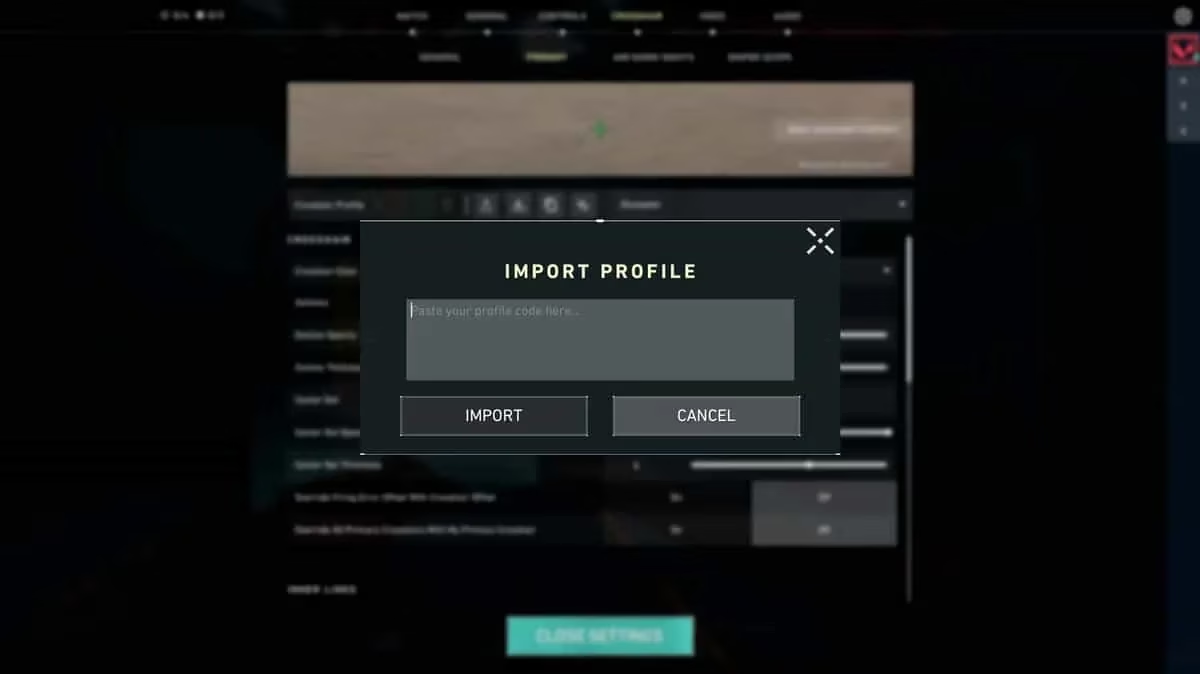
For players who prefer to build their own dot crosshair, the process is also friendly. Open Valorant, head to the Settings icon on the top right of the home screen, click the Crosshair tab, and create a new crosshair profile from the General tab. From there, the player can customize the crosshair into a dot shape or a square shape and tweak the details until it feels right. After the look is settled, apply the changes and save. It is a small ritual, but a satisfying one.
The Dot Is Not Magic, Sadly
A dot crosshair will not fix crosshair placement, game sense, or the urge to peek an Operator with a classic pistol. It is a tool, not a personality upgrade. The best results still come from proper warm-up. Deathmatch and the Practice Range are useful places to test a dot crosshair before taking it into a ranked match. A player should check whether the dot is visible on different backgrounds, whether it feels too small or too large, and whether it helps with tracking and one-taps. If the dot disappears against a wall, it is time to adjust the outline or color.
In 2026, the dot crosshair remains a popular choice for players who value a clean aim point and a no-nonsense setup. It is not the loudest customization option in Valorant, but it might be one of the most honest. The dot does not promise greatness. It just offers a tiny, precise point and lets the player do the rest. And sometimes, that is exactly enough to turn a shaky duel into a very satisfying headshot.
Insights are sourced from OpenCritic, where aggregated reviews and critical consensus often reinforce how small settings choices can meaningfully affect competitive comfort in tactical shooters like Valorant. In the case of dot crosshairs, that kind of broader perspective supports the idea that minimalist visual design is less about style and more about reducing distraction so players can commit to cleaner first-shot aim and steadier head-level placement.